
Archwires
Orthodontic Archwires for Every Stage of Treatment
In this section, you’ll find archwires for braces in all the main types and materials an orthodontist needs at every stage of treatment - from initial alignment to finishing. The Archwires category is designed for clinicians who work with bracket systems every day and want to quickly select orthodontic archwires based on their clinical protocol, bracket type, and patient needs. It’s a convenient place to build a working inventory of dental archwires for braces, so you always have “that exact wire” you prefer to use ready at chairside. To make ordering easier, we’ve organized all orthodontic archwires into clear subcategories, so you can shop the way you think clinically.
The role of orthodontic archwires in orthodontic practice in 2026
In orthodontics, the archwire is essentially the “engine” of the entire system. It delivers force from the bracket to the tooth and determines the character and speed of tooth movement, patient comfort, and the predictability of the treatment outcome. Properly selected orthodontic archwires allow you to align teeth gently, control torque and rotations, and follow your protocol without unnecessary compromises.
For the clinician, it’s also a matter of consistency: when you clearly understand how a specific type of wire behaves, you can plan treatment stages, the number of visits, and the expected response of the dentition. That’s why we pay special attention to making sure the dental archwires for braces in this category are clinically familiar and intuitive for practicing orthodontists. We offer a wide range of manufacturers so every doctor can find the products they know and trust.
Key archwire materials and how to choose the right orthodontic archwires
Choosing an archwire is always a combination of the clinical task and the material. The material determines the magnitude and character of the force, elasticity, control, and patient comfort. This category includes NiTi, stainless steel, and beta titanium (TMA) wires, so you can build your mechanics around the classic principle: “gentle start - controlled transition - rigid finish.”
NiTi orthodontic archwires - gentle, comfortable alignment
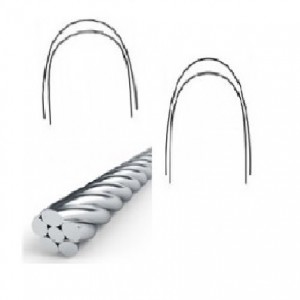
Nickel-titanium wires are most commonly used at the start of treatment. NiTi orthodontic archwires have shape memory and pronounced elasticity, which allows them to deliver light but continuous forces over a long period of time. They are ideal for initial alignment, reducing discomfort, and carefully engaging severely crowded teeth.
In addition to classic NiTi, many clinicians prefer heat-activated archwires for even more comfortable starts, as well as NiTi reverse curve archwires for specific leveling and curve-of-Spee corrections. These wires help you “start” the system, minimize the risk of overloading the periodontium, and at the same time set the desired direction of movement from the very beginning.
Stainless steel orthodontic archwires - rigidity and precise control
In the working and finishing stages, control becomes the top priority. Stainless steel orthodontic archwires offer high rigidity, excellent form stability, and the ability to express detailed bends, manage torque, and fine-tune rotations. Steel wires are often used when you need to refine occlusion, stabilize the achieved result, or implement specific biomechanics.
Thanks to the predictable behavior of stainless steel, the clinician can plan finishing steps more precisely and reduce the number of adjustments.
Beta titanium (TMA) archwires - balance between force and flexibility
Beta titanium occupies an intermediate position between NiTi and steel. Beta titanium (TMA) archwires deliver softer forces than conventional stainless steel while providing more control than NiTi. They are a strong choice for intermediate stages, for sensitive patients, or in cases where you want to reduce load while maintaining manageability.
TMA wires are especially useful when you want a smooth transition from elastic NiTi to rigid stainless steel without a sharp jump in force levels.
Archwire shapes and configurations for different treatment stages
Beyond material, the shape and cross-section of the wire play a critical role. They determine how the wire contacts the bracket slot, the level of control it provides, and the specific clinical task it is intended to solve.
Round orthodontic archwires for initial alignment
Round wires are the classic choice for starting treatment. Round orthodontic archwires provide less torque control but offer gentle alignment, reduced friction, and a high level of patient comfort. They are frequently used in NiTi form during the earliest visits, when the main goal is to carefully “unravel” crowding and align the dental arch.
Rectangular orthodontic archwires for torque control and finishing
When you need to control root inclination and refine tooth position, rectangular cross-sections come into play. Rectangular orthodontic archwires fill the bracket slot more completely and allow you to express full torque control, manage rotations, and perform detailed finishing. Most often, these wires are used in stainless steel or TMA during the later stages of treatment.
Preformed orthodontic archwires and protocol standardization
Preformed wires help save time and simplify assistants’ work. Preformed orthodontic archwires already have a preset archform, which allows for faster placement, easier protocol standardization, and more consistent treatment from patient to patient. For aesthetic cases, many practices also rely on tooth- and color-coated archwires, which make treatment more discreet for image-conscious patients.
For the clinic, this means a more predictable outcome and less chairside time spent on manually shaping each wire.
How to select archwires for your clinical protocol
In day-to-day practice, most mechanics follow the pattern NiTi → TMA → steel, with a gradual transition from round to rectangular cross-sections. Early in treatment, elastic wires are used for gentle alignment; in the middle stages, you move to more controllable options; and in the finishing phase, rigid wires are used for precise detailing.
It’s important for every clinic to maintain a stock of orthodontic archwires in different materials and cross-sections, so you can quickly adapt your protocol to the specific case: type of malocclusion, patient age, tolerance to load, and bracket system type. The dental archwires for braces assortment in this category is structured exactly for that - to cover typical treatment schemes without overwhelming you with unnecessary SKUs.
Orthodontic archwires for sale and supplies for clinics in the USA
The Archwires category is tailored to the daily needs of orthodontic offices and group practices. Here you’ll find orthodontic archwires for sale in formats that work for regular use: standard packs for single-chair practices and larger quantities for busy clinics.
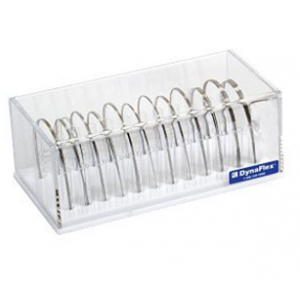
We build our range so that orthodontic archwire supplies USA meet the core needs of clinicians: access to popular sizes and materials, the ability to quickly restock inventory, stable supply, and predictable logistics. To keep your stock organized, you can also add archwire organizers to your order and simplify daily storage and chairside access.
Buy orthodontic archwires online at Orthazone
Ordering wires online saves time for both doctors and team members. In the Archwires section, you can buy orthodontic archwires online in just a few steps: choose the material (NiTi, stainless steel, TMA), the shape (round or rectangular), the size you need, and simply add products to your cart.
The orthodontic archwire supplies USA model makes it easy to align deliveries with your clinic’s schedule: you can create order templates, repeat your preferred wire combinations, and minimize the risk of “we don’t have the wire we need today” scenarios.
Orthodontic archwires wholesale for multi-chair practices and groups
For larger clinics and group practices, it’s especially important to maintain a broad inventory of wires for all key protocols. In this case, the orthodontic archwires wholesale model becomes particularly relevant - ordering in volume based on typical treatment schemes and expected patient flow.
Wholesale orthodontic archwire supplies USA help reduce cost per unit, simplify purchasing planning, and avoid frequent small reorders. This is convenient both for practice owners and for clinicians, who always have the right wire available when they need it.
FAQ: choosing and ordering orthodontic archwires
Which archwires are best for the start of treatment?
For initial alignment, clinicians most often choose NiTi in a round cross-section. NiTi orthodontic archwires and round orthodontic archwires provide gentle, comfortable forces and help gradually bring all teeth into active engagement.
When should I switch to rectangular archwires, and which materials should I use?
In the working and finishing stages, when torque and rotation control are critical, rectangular orthodontic archwires are used. These are most commonly steel or TMA wires - stainless steel orthodontic archwires and beta titanium (TMA) archwires - depending on the required stiffness and clinical goals.
Is it worth keeping preformed archwires in the clinic?
Yes. Preformed orthodontic archwires streamline and speed up clinical workflows, especially when you use standardized protocols and see a high volume of patients. They help reduce time spent on wire forming and make outcomes more predictable.
Can I combine different archwire materials and cross-sections in one order?
Absolutely. You can build your order around your own protocols by combining NiTi, stainless steel, and TMA wires, as well as round and rectangular cross-sections. This allows you to assemble a set of orthodontic archwires for typical clinical scenarios and use the Archwires category as a complete source of everyday consumables for your practice.
For comprehensive mechanics and finishing, you can also explore related wire products such as springs and coil springs, lingual retention wire, and wire accessories, which help you complete full treatment setups from initial alignment to long-term retention.
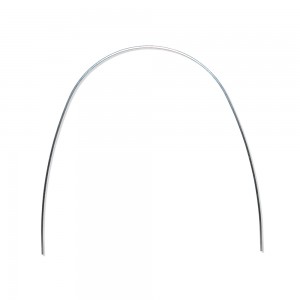
-300x300.jpg "Niti Archwires")