
Diamond Burs
Dental Diamond Burs for Everyday Dentistry and Orthodontics
Welcome to the Orthazone online store. In this section we’ve collected dental diamond burs that are suitable for the everyday work of dentists and orthodontists. Here you’ll find a wide selection of diamond burs for dentistry, conveniently organized by shape, grit, and indication to cover tooth preparation, cavity treatment, orthodontic finishing, and esthetic restorations. The category is structured so you can quickly locate the dental diamond burs for sale you need without wasting time scrolling through unrelated instruments. More than 22,000 registered users across the USA trust Orthazone for their orthodontic supplies and diamond burs.
The role of dental diamond burs in modern dentistry
Diamond burs are the foundation of the rotary instrument kit. They are used for crown and bridge preparation, cavity preparation, refinement of composite restorations, and finishing of enamel. Properly selected diamond burs for dentists help you work faster, more precisely, and more predictably, reducing hand fatigue and the risk of overheating tissues.
In many prosthodontic and restorative protocols, dental diamond burs determine margin geometry, finish lines, occlusal form, and smooth transitions. In orthodontics, they help complete treatment – removing adhesive, refining enamel, and adjusting contacts after debonding. For occlusal and interproximal finishing, many doctors also combine diamond burs with disks from the Diamond & Econo Disks category.
Main clinical indications for diamond burs
Tooth preparation for crowns and bridges
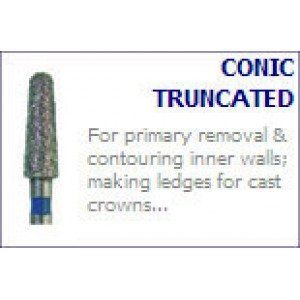
One of the primary applications is crown and bridge work. Dental diamond burs for crown and bridge are used for axial and occlusal reduction, shoulder or chamfer formation, slope and bevel creation, and smooth transitions with clear anatomic reference points.
Thanks to controlled abrasiveness and a wide variety of shapes, diamond burs for tooth preparation help you maintain ideal wall thickness, achieve a precise finish line, and reduce chair time spent on corrections.
Cavity preparation and minimally invasive restorative treatment
In caries treatment, you must balance effective removal of infected tissue with maximal preservation of sound structure. Diamond burs for cavity preparation help you open access, extend the outline, remove softened dentin, and refine enamel margins where needed.
By selecting different shapes and sizes of diamond burs for tooth preparation, you can work selectively, follow minimally invasive principles, and prepare the cavity for composite or other restorative materials.
Esthetic restorations and veneers
In the esthetic zone, precision and predictability are critical. Dental diamond burs for veneers are used to prepare teeth for veneers, fine-tune the shape of anterior teeth, and work on incisal edges and contact areas.
For finishing composite restorations, clinicians rely both on universal shapes and on specialized dental diamond burs for composite that smooth margins, level surface texture, and prepare the restoration for final polishing. At the last stages of shaping, many protocols include delicate diamond finishing burs, which help create smooth contours with minimal surface roughness.
Orthodontics and finishing stages of treatment
After debonding, it is important to remove adhesive carefully and, when needed, refine the enamel micro-relief. Orthodontic diamond burs are designed for work on small areas and near soft tissues.
These burs allow gentle adhesive removal, edge refinement, and minor contour adjustments without creating grooves or excessive roughness. In combination with polishing pastes, cups, and diamond finishing burs, they help restore enamel smoothness and shine. For controlled interproximal finishing and IPR, many orthodontists also use systems from the Interproximal Strips category.
Shapes and configurations of dental diamond burs
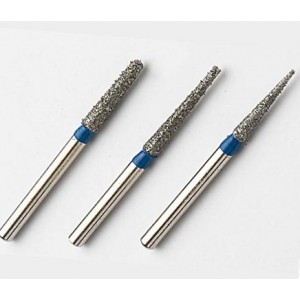
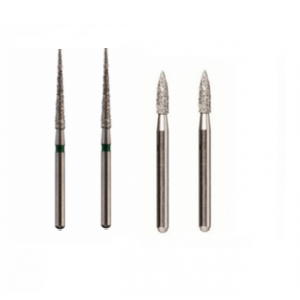
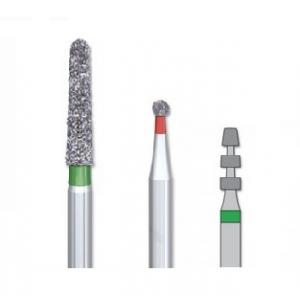
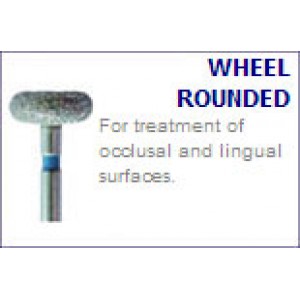
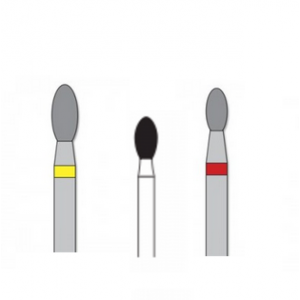
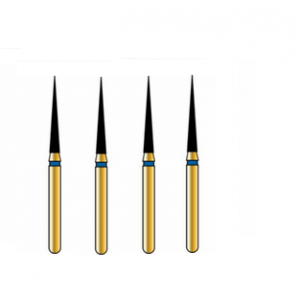
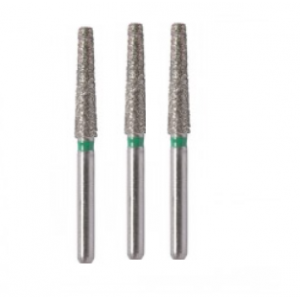
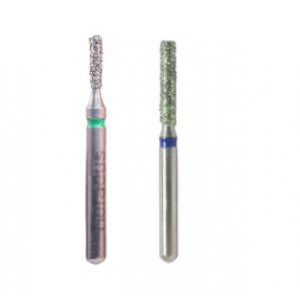
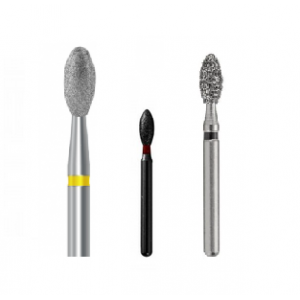
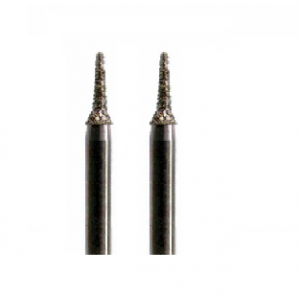
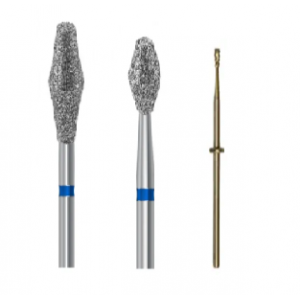
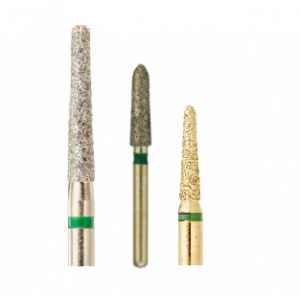
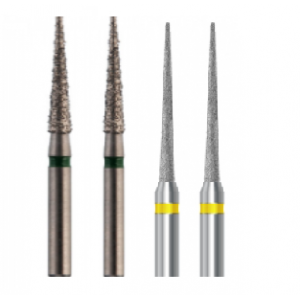
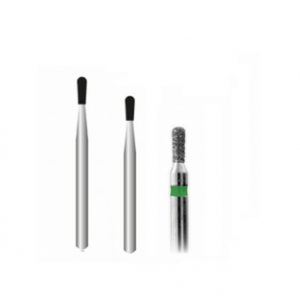
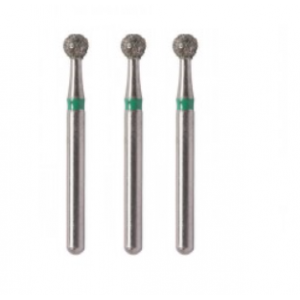
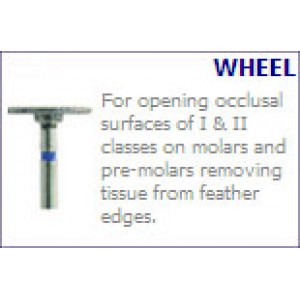
The Diamond Burs category includes dozens of shapes, each designed for specific tasks. Classic bullet, cylinder, football, needle, round, flame, pear, and other profiles let you work on occlusal, proximal, facial, lingual, and cervical surfaces.
Within this parent category we outline these directions, while detailed specs—diameter, working length, and edge design—are covered in the individual subcategories. The principle is straightforward: elongated shapes are ideal for axial reduction and wall preparation, ball and round forms for cavity and occlusal work, and thin needle-like burs for access and refinement in hard-to-reach zones. Regardless of shape, all these options are part of the overall dental diamond burs assortment.
Grit selection and workflow: from reduction to diamond finishing burs
Grit size directly affects cutting speed and surface quality. Coarse and medium-grit burs are used for primary reduction when you need to remove a significant volume of tooth structure or restorative material. Fine and extra-fine options serve as diamond finishing burs for smoothing, contour refinement, and pre-polish.
The usual sequence is: coarse dental diamond burs for bulk reduction, medium grit for defining anatomy, and finishing burs to remove scratches and leave a uniform surface. This stepwise approach reduces heat generation, minimizes polishing time, and keeps results under control at every stage.
How to choose diamond burs for dentists based on practice profile
Your instrument set should match the core services you provide. For a general dentist, a compact set of diamond burs for dentists may include essential shapes and grits for caries treatment, crown and bridge preparation, and a few finishing burs for restorative work.
If your focus is esthetics, it makes sense to expand the set with dental diamond burs for veneers and dental diamond burs for composite: thin, delicate shapes for the anterior segment, finishing burs for composite and ceramic surfaces, and special designs for margin and contact adjustments.
In orthodontic practice, the emphasis shifts toward orthodontic diamond burs and gentle diamond finishing burs with maximum control and minimal aggressiveness. Multidisciplinary clinics often standardize their instrument lists across operatories so every doctor has access to the same core line of dental diamond burs, simplifying training and quality control.
Dental diamond burs for sale – solutions for clinics in the USA
At Orthazone you’ll find dental diamond burs for sale in multiple formats: individual SKUs, assortment packs, and kits grouped by shape, grit, or indication. This lets you selectively replenish high-use items as well as build new sets when your treatment protocols change.
The assortment is designed for solo practices, multi-chair clinics, and group practices alike. You can assemble a minimal starter kit for a new operatory or a standardized list of instruments for an entire network, making it easier to manage inventory and reduce random one-off purchases.
Buy dental diamond burs online at Orthazone
The Diamond Burs section is your go-to place when you want to buy dental diamond burs online for specific clinical tasks. Filters by shape, size, grit, shank type, and indication help you quickly narrow the catalog to the most relevant options.
A major advantage of Orthazone is that you can order dental diamond burs together with bur organizers, lab burs, disks, and other rotary accessories. For example, many clinicians pair diamond burs with storage solutions from Bur Blocks and laboratory instruments from the Lab Burs category, as well as finishing kits from Ortho Finishing Burs/Points. This saves time on logistics, reduces the number of separate deliveries, and helps you plan purchases for several operatories or locations at once.
FAQ: choosing and using dental diamond burs
Which burs should I choose for a basic crown and bridge preparation set?
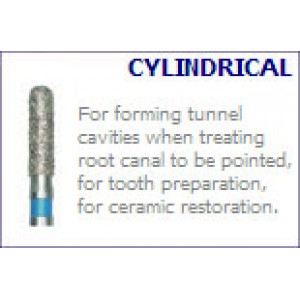
For crown and bridge work, include several dental diamond burs for crown and bridge: cylindrical and tapered forms for axial reduction, flame and modified shapes for margin preparation, plus a few fine-grit burs for finishing. At the core of the kit are diamond burs for tooth preparation with different grits for each stage.
Which diamond finishing burs are best for composites and veneers?
For composite restorations and veneers, choose delicate diamond finishing burs and specialized dental diamond burs for composite. They smooth the transition between material and enamel without leaving deep scratches. For veneers—especially ceramic ones—slender, elongated dental diamond burs for veneers provide precise access and control in challenging areas.
How are orthodontic diamond burs different from standard diamond burs?
Orthodontic diamond burs usually have smaller working parts, finer grits, and shapes tailored to work around brackets, interproximal areas, and the gingival margin. They are designed for safe adhesive removal and gentle enamel contouring with maximum control, whereas universal diamond burs for dentists are optimized for a broader range of restorative procedures.
How often should I replace dental diamond burs in my clinic?
Replacement frequency depends on workload and procedure mix, but a practical rule is: once dental diamond burs lose cutting efficiency, generate excess heat, or leave visible scratches, they should be replaced. In busy offices, it’s wise to review bur sets regularly and plan reorders in advance to ensure a complete, fully functional set of diamond burs for dentistry is always available chairside.