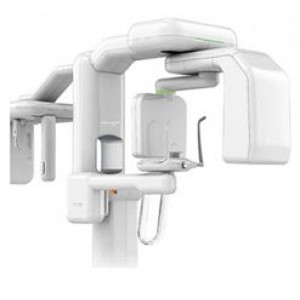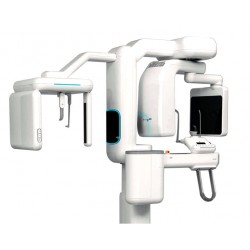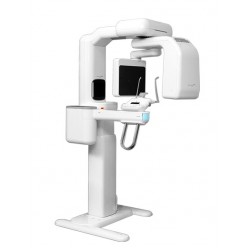

3D-Ct Scan X-Ray Unit
Dental CBCT Scanners for Dental & Orthodontic Practices
3D Cone Beam Imaging for Advanced Dental Diagnostics
Modern dental CBCT machines give dental and orthodontic practices access to three-dimensional imaging directly in the office. Unlike conventional 2D radiography, cone beam computed tomography creates a volumetric dataset that can be reviewed from different planes and angles, providing additional anatomical information when it is clinically needed.
A CBCT system can be a significant investment, so choosing one should start with the procedures your practice performs rather than with the longest list of technical specifications. Field of view, image resolution, software, patient positioning, scan protocols, office space, installation, training, warranty, and service can all affect how useful the equipment will be in daily practice.
What Is a Dental CBCT Machine?
A dental CBCT machine uses cone beam computed tomography to acquire a series of X-ray projections around the patient and reconstruct them into a three-dimensional digital volume. Clinicians can then review the anatomy from multiple planes instead of relying on a single two-dimensional projection.
This additional information can be valuable in cases where the position, shape, or relationship of anatomical structures cannot be fully evaluated with conventional radiographs alone.
Dental CBCT equipment is designed specifically for dentomaxillofacial imaging. Depending on the system and selected scan protocol, the captured area can range from a localized region to one or both jaws or a larger craniofacial field.
Some systems also offer additional imaging modes, but configurations vary by manufacturer and model. If your practice primarily needs routine panoramic and cephalometric records rather than regular 3D imaging, compare the systems in our 2D Pan-Cephalogram X-Ray category.
What Is CBCT Used for in Dentistry?
A 3D dental X-ray machine is most useful when three-dimensional anatomical information can contribute to diagnosis or treatment planning. The appropriate scan and field of view should always be selected according to the clinical task.
Common applications may include:
- Implant planning: Evaluating bone dimensions and the relationship between a proposed implant site and nearby anatomical structures.
- Impacted teeth: Reviewing the three-dimensional position and orientation of impacted or unerupted teeth.
- Orthodontics: Assessing selected complex cases where additional information about tooth position, craniofacial anatomy, or asymmetry may be useful.
- Endodontics: Evaluating selected root and periapical anatomy that may be difficult to assess completely with 2D imaging.
- Oral surgery: Reviewing anatomical relationships before selected surgical procedures.
- Craniofacial assessment: Examining broader anatomical relationships when a larger imaging field is clinically appropriate.
The value of CBCT comes from using 3D imaging when it adds meaningful diagnostic information, not simply from scanning every patient in three dimensions.
Who Should Consider an In-Office CBCT System?
Not every dental office needs its own CBCT system. For practices that use three-dimensional imaging frequently, however, bringing the workflow in-house can reduce dependence on outside imaging centers and make scans more accessible during diagnosis and treatment planning.
A CBCT system may be worth considering if your practice:
- Regularly performs implant treatment planning.
- Treats impacted teeth or complex orthodontic cases.
- Provides oral surgery or advanced endodontic treatment.
- Frequently sends patients elsewhere for CBCT imaging.
- Is replacing an older 3D imaging system.
- Is opening a new location where CBCT will be used regularly.
- Wants to expand the diagnostic capabilities available in-house.
Patient volume also matters. A practice that needs only occasional CBCT studies may approach the investment differently from an office where 3D imaging is part of the everyday clinical workflow.
Understanding CBCT Field of View
Field of view (FOV) describes the anatomical area captured during a scan. It is one of the most important specifications to evaluate when comparing a CBCT system because different clinical applications require different amounts of coverage.
Small Field of View
A smaller FOV concentrates on a localized anatomical area. It can be appropriate for cases where the diagnostic question is limited to a small region and broader anatomical coverage is unnecessary.
Medium Field of View
A medium FOV provides additional coverage and may be useful when several teeth, a larger portion of the jaw, or surrounding structures need to be evaluated together.
Large Field of View
A larger FOV captures a broader anatomical region and can be useful for selected orthodontic, surgical, and craniofacial applications.
A larger field of view is not automatically better. When comparing systems, consider the scan sizes your practice will actually use and whether the equipment offers enough flexibility to match different diagnostic tasks.
How to Choose a CBCT Machine for Your Practice
Two systems may both be described as CBCT equipment while offering very different capabilities and ownership experiences. Before choosing a CBCT scan machine, compare the features that will affect both clinical use and day-to-day operation.
- Field of view: Review the available scan sizes and make sure they match the procedures performed in your practice.
- Image resolution: Different clinical applications may require different levels of detail.
- Scan protocols: Multiple protocols allow imaging coverage to be adjusted to the diagnostic task.
- Patient positioning: A clear, repeatable positioning process can help trained staff work efficiently and consistently.
- Workflow speed: Consider patient setup, acquisition time, image reconstruction, and how quickly the system is ready for the next patient.
- Software: Review viewing, measurement, export, treatment-planning, and integration capabilities.
- Office requirements: Confirm equipment dimensions, electrical requirements, room layout, and any site preparation before purchase.
- Training: Doctors and staff should receive appropriate training for both equipment operation and software workflow.
- Warranty and service: Understand who provides technical support, maintenance, calibration, parts, and troubleshooting after installation.
CBCT Machine Price & Cost: What Affects the Investment?
A CBCT machine price can vary considerably depending on imaging capabilities, field of view, detector configuration, software, installation, warranty, and included services.
The cost of a CBCT machine should therefore be evaluated as the total cost of putting the system into daily operation rather than simply comparing the advertised price of the equipment.
Depending on the system and purchase package, total cost may include:
- The CBCT unit and selected imaging configuration.
- Available fields of view and imaging modes.
- Imaging and treatment-planning software.
- Computer hardware and monitors.
- Shipping and professional installation.
- Staff training.
- Warranty or extended service coverage.
- Room preparation and electrical work.
- Ongoing maintenance and technical service.
The dental CBCT machine price can also change significantly depending on whether the system includes additional imaging capabilities or a larger range of scan sizes.
When requesting quotes, compare what is actually included. Two systems with similar base prices may represent very different investments once installation, software, training, hardware, and service are added.
New vs. Used or Refurbished CBCT Equipment
Practices evaluating a CBCT machine for sale will often encounter both new and refurbished equipment. A refurbished system may offer a lower initial price, while a new system provides a known history from the beginning and may include current software, warranty coverage, installation, and training depending on the purchase package.
Before purchasing used or refurbished CBCT equipment, review:
- The age of the system.
- Previous usage and service history.
- Condition of the X-ray tube, detectors, and mechanical components.
- Current software compatibility.
- Availability of software updates.
- Availability of replacement parts.
- Installation and calibration requirements.
- Warranty coverage.
- Availability of qualified technical support.
- Whether staff training is included.
The lowest purchase price does not always result in the lowest long-term cost. Service availability and the ability to keep the system operating reliably are especially important for equipment that becomes part of the practice's regular diagnostic workflow.
What Makes the Best CBCT Machine for a Dental Office?
There is no single best CBCT machine for every practice. A system that is well suited to an implant-focused general dental office may not be the best choice for an orthodontic practice or a clinic that primarily performs localized endodontic imaging.
The better question is whether the system's capabilities match the work performed in your office.
For example, consider:
- Which field-of-view sizes will actually be used?
- How often will patients be scanned?
- Which clinical specialties will use the equipment?
- Does the software provide the tools your doctors need?
- Can trained staff use the system efficiently?
- Does the equipment fit the available imaging room?
- Who will install and service the system?
- What is included in the warranty?
Comparing these questions is usually more useful than choosing a system based on one specification or brand name alone.
CBCT Equipment for New Offices and Practice Expansion
CBCT purchases happen at different stages of practice growth, and the reason for buying the equipment can influence which configuration makes sense.
Opening a New Practice
A new office has to balance imaging capabilities with startup costs, available space, financing, expected patient volume, and future growth. If 3D imaging will be central to the services offered by the practice, installing CBCT from the beginning may make sense. If usage is expected to be limited, the investment should be considered carefully.
Replacing an Existing CBCT System
An established practice replacing older equipment may prioritize workflow continuity, software compatibility, image quality, installation timing, warranty coverage, and dependable service. Staff familiarity and the transition from the existing system can also influence the decision.
Adding CBCT to Another Location
Multi-location practices do not necessarily need the same imaging equipment in every office. Before installing a second system, consider how frequently 3D imaging will actually be required at that location and whether patients can reasonably be referred to another office within the same practice when necessary.
CBCT vs. Routine 2D Imaging
CBCT and conventional 2D imaging serve different purposes. Three-dimensional imaging can provide valuable anatomical information, but many routine dental and orthodontic records can still be performed efficiently with panoramic and cephalometric systems.
If your office primarily requires routine panoramic and orthodontic records, explore our 2D Pan-Cephalogram X-Ray Systems.
For an overview of both approaches, return to the 2D Pan, Ceph & 3D X-Ray Units category.
Why Buy CBCT Equipment from OrthAzone?
A CBCT purchase is a long-term equipment decision. Image quality and specifications matter, but so do installation, software, training, warranty coverage, and access to technical support once the system is in use.
OrthAzone helps dental and orthodontic practices compare available 3D imaging options based on clinical requirements, workflow, office setup, and budget. Depending on the equipment and purchase package, available services may include installation, staff training, warranty coverage, and technical support.
Before choosing a system, confirm what is included in the quoted price and what additional requirements apply to your office.
Dental CBCT Machine FAQs
What is a dental CBCT machine?
A dental CBCT machine is an extraoral X-ray system that uses cone beam computed tomography to create a three-dimensional digital volume of the scanned anatomy. The volume can then be reviewed from multiple planes and viewing angles.
How much does a CBCT machine cost?
CBCT machine cost varies based on field of view, imaging configuration, detector technology, software, installation, training, warranty, and manufacturer. The most useful comparison is the total installed cost rather than only the advertised equipment price.
What is the difference between a CBCT machine and a panoramic X-ray machine?
A panoramic system creates a two-dimensional overview of the teeth and jaws. CBCT creates a three-dimensional volumetric dataset. The appropriate imaging method depends on the diagnostic information required for the individual case.
What field of view should I choose?
The appropriate FOV depends on the types of procedures performed in your practice. Smaller fields can be useful for localized applications, while larger fields provide broader anatomical coverage. Practices serving several specialties may benefit from systems with multiple FOV options.
Does every orthodontic office need CBCT?
No. Many orthodontic practices use panoramic and cephalometric imaging for routine records and use CBCT selectively when additional three-dimensional information is clinically appropriate.
Can a CBCT system also take panoramic images?
Some systems include additional 2D imaging capabilities, while others have different configurations. Always review the imaging modes of the specific equipment before purchasing.
What should I look for when comparing CBCT machine brands?
Compare field of view, image quality, software, workflow, patient positioning, installation requirements, warranty, service availability, training, and total cost of ownership rather than evaluating the brand name alone.
Should I buy a new or refurbished CBCT machine?
Both can be viable options. New equipment offers a known history and may include current warranty and software support. Refurbished equipment can reduce the initial investment, but its condition, service history, software compatibility, parts availability, and warranty should be carefully evaluated.
Shop Dental CBCT Machines
OrthAzone offers dental CBCT machines for practices adding three-dimensional imaging, replacing existing equipment, or expanding into a new location.
Compare current systems based on field of view, imaging capabilities, software, workflow, installation requirements, warranty, and support. For other types of dental imaging equipment, return to the main X-Ray Imaging section.