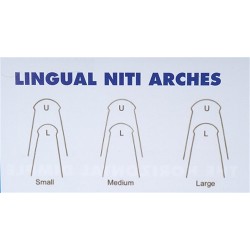

Lingual Retention Wire
Lingual Retention Wire for Long-Term Orthodontic Retention
Welcome to Orthazone, the online store built for orthodontists. You are in the lingual retention wire section, where we’ve collected the best solutions used every day by orthodontists across the United States. Lingual retainer wire is an excellent tool for preserving results after the active phase of orthodontic treatment. Fixed retainers on the lingual surfaces of the teeth remain one of the most reliable options for long-term retention and this is also one of the most frequently visited categories on our site. All of your favorite brands are organized for fast ordering: you can filter by brand name, or simply type what you need into our smart search bar at the top of the page. For your convenience, orthodontic lingual retention wire has its own dedicated category so you can quickly choose options that match your clinical protocols.
The role of lingual retention wire in post-orthodontic retention
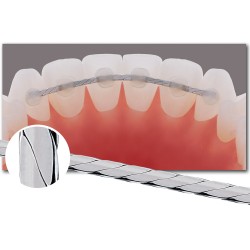
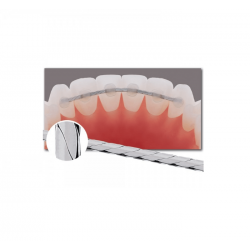
A fixed lingual retainer is a wire bonded to the lingual surfaces of the teeth with composite. Fixed lingual retainer wire keeps teeth in their corrected positions after brackets or aligners are removed, helping minimize the risk of relapse. Unlike removable retainers, which patients may forget or wear inconsistently, a bonded lingual retainer wire works 24/7 and does not depend on patient compliance.
For that reason, many clinicians view a permanent lingual retainer wire as the standard of care for higher-risk groups: lower anterior crowding, corrected diastemas and spacing, and interdisciplinary cases where stability of tooth position is critical. In these situations, fixed retention is not just a “final step,” but a structured part of the overall treatment strategy.
From the practice perspective, long term orthodontic retention wire becomes part of a long-term maintenance plan, especially if your reputation is built on stable, predictable results years after debonding.
Main types and designs of lingual retention wires
Choosing a lingual retainer wire means balancing passivity, patient comfort, hygiene, and clinical convenience. This category includes solutions tailored to different philosophies of orthodontic retention.
Multistrand and braided lingual retention wire
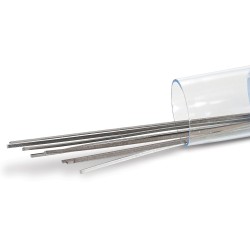
One of the most popular options is multistrand wire. Multistrand lingual retainer wire adapts well to the arch form, closely follows the contour of the teeth, and remains highly passive. It accommodates small physiological tooth movements and helps reduce the risk of localized overload.
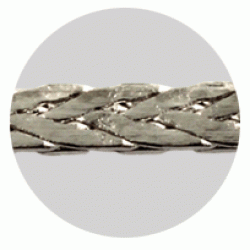
A braided construction - braided lingual retention wire - also provides excellent adaptation and patient comfort, while remaining discreet from the lingual side. For the clinician, these wires are convenient because they can be formed to match individual anatomy while maintaining the desired flexibility. In most protocols, this type of orthodontic lingual retainer wire becomes the “workhorse” for lower and, when indicated, upper arches.
Selecting stiffness and material
Beyond design, stiffness matters. Softer, more flexible lingual retainer wire or even dead soft lingual retention wire is useful when you want to minimize unintended force transmission and allow limited physiologic adaptation of the teeth.
A stiffer stainless steel lingual retainer wire provides stronger stabilization but requires more precise forming and careful bonding to avoid creating active segments. The key is to keep the retainer as passive as possible, especially when you plan long-term retention.
Indications and zones of use: lower 3–3 and upper anterior teeth
The classic indication for lingual retention wire is the lower anterior segment. Lingual retention wire for lower 3–3 is considered the gold standard after treatment of lower incisor crowding and correction of the lower arch form.
Fixed retention is also increasingly used for the upper anterior segment - when closing diastemas and spaces, after comprehensive esthetic treatment, and in cases with a high risk of relapse. Lingual retention wire for upper anterior teeth helps stabilize the result without relying solely on removable retention.
In this way, orthodontic lingual retention wire is not limited to “standard” lower 3–3 retention; it becomes a flexible tool for broader retention protocols depending on the clinical situation.
How to choose orthodontic lingual retainer wire for your practice protocols
Selecting an orthodontic lingual retainer wire starts with assessing relapse risk: type of malocclusion, initial crowding, presence of diastemas or spacing, patient age, motivation, and hygiene. When risk is high and compliance is uncertain, fixed retention is often the logical baseline.
Next, you define your “go-to” wire:
- for most cases – multistrand lingual retainer wire or braided lingual retention wire in suitable diameters;
- for patients with sensitive periodontium or when you want ultra-gentle fixation – more flexible options (flexible / dead soft);
- for situations where a more rigid “framework” is required – selected stainless steel configurations.
A rational approach is to standardize one or two types of orthodontic lingual retainer wire that cover 80–90% of your cases and keep them constantly in stock. This simplifies assistant training, speeds up chairside work, and makes your retention protocols more consistent and predictable across the clinic.
Lingual retention wire for sale and supplies for US clinics
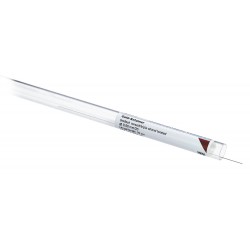
The lingual retention wire for sale subcategory at Orthazone is organized for real, day-to-day clinical use. Here you’ll find lingual retention wires in different formats: spools, cut lengths, and pre-cut segments, so you can choose what fits your workflow best.
The range is designed so that lingual retainer wire supplies USA cover the core needs of both single-chair and multi-chair practices:
- standard diameters for lower 3–3 retention;
- options for upper anterior retention;
- various constructions (multistrand, braided, softer and stiffer designs).
The focus is on supply stability and clinical relevance rather than exotic products that rarely get used.
Buy lingual retention wire online at Orthazone
Online ordering through Orthazone makes it easy to select lingual retention wire for your current cases. In this section you can filter products by wire type (multistrand / braided), diameter, and format (spool or pre-cut segments).
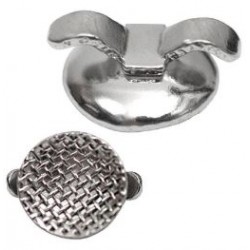
You can also buy lingual retention wire online together with other key categories such as bracket systems, bonding supplies for retainer bonding, and elastomeric products. No matter how many brands and product lines you combine, you place one order, receive one shipment, and pay for shipping once, without multiple invoices and logistics complications. For US practices, this makes replenishing lingual retainer wire supplies USA less vulnerable to stock disruptions.
Orthodontic lingual retainer wire wholesale for multi-chair practices
Group practices and multi-chair offices often transition to an orthodontic lingual retainer wire wholesale model. This is a logical step if you:
- have standardized retention protocols;
- use one or two wire types in most cases;
- want to eliminate “we couldn’t place a retainer today because we ran out of wire” situations.
Wholesale purchasing within lingual retainer wire supplies USA helps you:
- reduce per-unit cost;
- keep key SKUs consistently in stock;
- simplify purchasing and budgeting for the retention phase;
- maintain a unified retainer standard across the entire clinical team.
FAQ: choosing and using lingual retention wire
How long should I plan to keep a fixed lingual retainer in place?
In everyday practice, many clinicians view fixed lingual retainer wire as a long-term, and in some cases lifelong, retention solution - especially in the lower 3–3 region and in cases of significant initial crowding. While formal retention time can be discussed with the patient, from a relapse-risk standpoint, a permanent lingual retainer wire offers the most predictable stability.
When should I choose multistrand vs braided wire?
Both multistrand lingual retainer wire and braided lingual retention wire provide good adaptation and passivity. The choice often comes down to clinician preference and protocol: some prefer smoother multistrand wires, others like the handling and flexibility of braided designs. What matters most is that the retainer is easy to form, fits closely, and does not create unintended active forces.
How do flexible/dead soft wires behave compared with stiffer wires?
Softer options such as flexible or dead soft lingual retention wire accommodate minor changes better, lower the risk of overloading individual teeth, and may be useful in patients with more delicate periodontium. Stiffer designs (for example, stainless steel lingual retainer wire) provide stronger stabilization but require very precise forming and bonding to avoid turning the retainer into an active appliance.
Which zones should be included in a standard retention protocol - only lower 3–3 or also upper anterior teeth?
For many practices, a minimum standard is lingual retention wire for lower 3–3, especially after lower incisor crowding correction. However, in cases with diastemas, pronounced spacing, complex esthetic demands, or a high risk of relapse, it makes sense to consider lingual retention wire for upper anterior teeth as well. The final decision depends on your clinical philosophy, patient profile, and your readiness to manage long-term retention in a structured way.











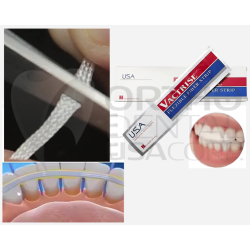
Supplier: Orthodentalusa Corp.

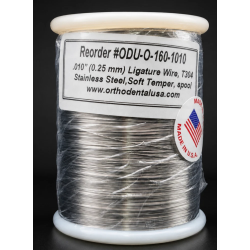
Supplier: Orthodentalusa Corp.
Supplier: Orthodentalusa Corp.
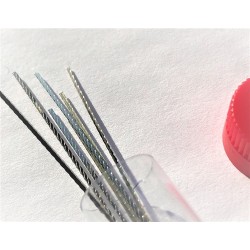
Supplier: Modern Arch Orthodontic Supplies


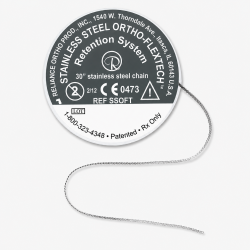
Supplier: Reliance Orthodontic Products