

Springs
Orthodontic Coil Springs for Space Opening and Space Closing
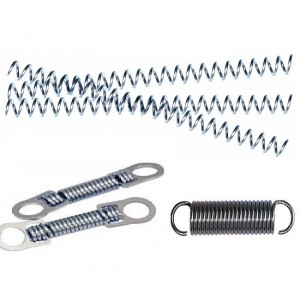
This subcategory features a wide range of orthodontic coil springs for braces that help control space in the arch, manage treatment timing, and guide the direction of tooth movement. Here you can easily select orthodontic coil springs for space opening, space closing, distalization, retraction, and other tasks in modern orthodontic mechanics without scrolling through endless catalog pages.
The role of orthodontic coil springs in modern orthodontic mechanics
Springs in orthodontics are a tool for fine-tuning the force level and direction of tooth movement. Orthodontic coil springs supplement archwires, elastics, and TADs, allowing you to control space and load distribution more precisely.
With orthodontic springs for braces, you can:
- create or maintain space for future restorations;
- close extraction spaces or unwanted gaps;
- distalize segments as part of comprehensive mechanics;
- perform controlled retraction of the anterior segment.
In many cases, coil springs for tooth movement reduce the need for extensive wire bending and make biomechanics more predictable.
Main types of springs: open, closed, NiTi, and stainless steel
From a clinical standpoint, it is convenient to classify springs by construction (open / closed), material (NiTi / stainless steel), and delivery format.
Open coil springs for space opening
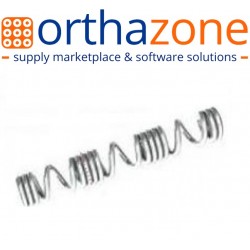
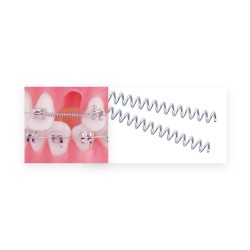
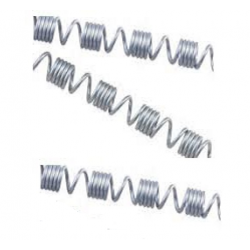
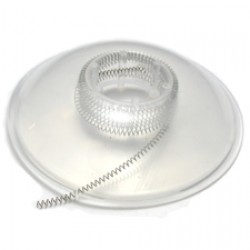
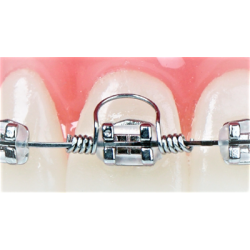
Open coil springs for orthodontics are most commonly used to create or increase space between teeth. They are placed on the archwire between brackets to gently separate teeth and form space for implants, restorations, or movement of neighboring teeth.
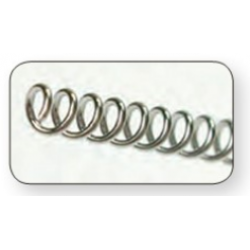
Orthodontic coil springs for space opening are indispensable in cases of significant crowding, when you need to free up space for blocked-out teeth or derotation of rotated crowns. For longer active segments, clinicians may use continuous coil springs for braces that work along extended sections of the arch.
Closed coil springs for space closing and retraction
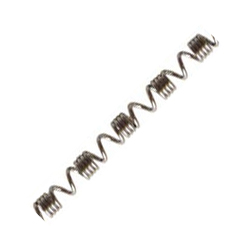
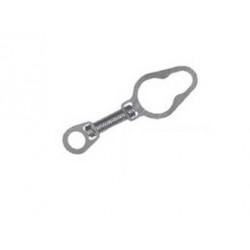
Closed coil springs for orthodontics are more often used to pull teeth together and close spaces after extractions, as well as in retraction systems. Combined with proper anchorage, these springs help achieve controlled segmental movement without excessive archwire bending.
In clinical protocols, orthodontic coil springs for space closing and orthodontic retraction springs are used for anterior retraction, mesialization and distalization of individual teeth or entire segments. Orthodontic springs for distalization may function as part of more complex systems, for example in combination with TADs or distalizing appliances.
NiTi orthodontic coil springs and stainless steel springs
By material, springs are generally divided into nickel-titanium and stainless steel.
NiTi orthodontic coil springs and nickel titanium coil springs for braces deliver long-lasting, relatively light and stable forces, which is especially useful with sensitive patients, longer intervals between appointments, and more complex mechanics.
Stainless steel orthodontic coil springs provide a stiffer and highly predictable response when you need a clearly controlled force and precise expression of planned movement. Some lines of orthodontic power springs are designed specifically for higher force levels in demanding mechanics.
Formats, force levels, and spring configurations
Beyond type and material, it is important to consider the delivery format and force level of the spring.
Prefabricated and preformed coil springs
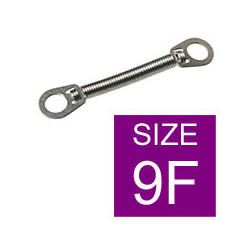
Prefabricated orthodontic coil springs and preformed orthodontic coil springs are supplied ready to use, with predefined length, coil pitch, and force characteristics. This saves chair time for both doctor and assistant: there is no need to measure and trim every spring manually - you simply choose the configuration that fits the clinical scenario.
Light, medium, and heavy force coil springs
Manufacturers offer springs in different force levels - light medium heavy force coil springs. Light-force options are suitable for more delicate movements, adolescent patients, or those with a sensitive periodontium. Medium and heavy forces are used when a more pronounced effect is needed, but the choice must always factor in anchorage quality and the overall treatment plan.
Continuous and sectional solutions for different tasks
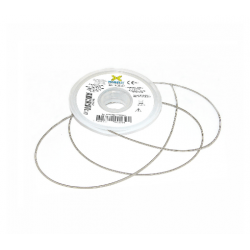
In some cases, long continuous coil springs for braces are ideal for working along an extended arch segment, for example when creating space or closing multiple gaps at once.
In other situations, sectional orthodontic coil springs are more appropriate for localized tasks - moving a single tooth or a small segment with minimal impact on neighboring areas.
How to choose orthodontic springs and coils for your clinical protocol
Selecting orthodontic springs and coils should always be based on the biomechanics of the specific case. The clinician evaluates:
- whether space needs to be created or closed (space opening vs space closing);
- the amount and direction of movement (mesial, distal, retraction of the anterior segment, etc.);
- the required force level and duration (light / medium / heavy);
- the preferred material - NiTi orthodontic coil springs for gentle, long-acting forces, or stainless steel orthodontic coil springs for stiffer, more controlled mechanics.
Orthodontic coil springs for space opening are typically used in open-coil format, while orthodontic coil springs for space closing are more often closed-coil. Combining different types of springs allows you to build complex but predictable tooth movement schemes.
Orthodontic coil springs for sale and supplies for US clinics
This Orthazone subcategory is designed for practicing orthodontists and clinics of all sizes. Here you’ll find orthodontic coil springs for sale with a variety of lengths, force levels, materials, and constructions.
The catalog is organized so that orthodontic coil spring supplies USA cover the most common needs: from standard open and closed springs to more specialized solutions for distalization and retraction. For purchasing managers, this simplifies planning and allows orders to be built around real clinical protocols rather than guesswork.
By working with trusted dental orthodontic springs suppliers, Orthazone helps clinics maintain consistent supply and predictable quality.
Buy orthodontic coil springs online at Orthazone
Online ordering makes it easy to select springs for current clinical tasks. In this section, you can buy orthodontic coil springs online using filters by type (open / closed), material (NiTi / stainless steel), force level (light / medium / heavy), and format (continuous / sectional).
A key advantage of Orthazone is the ability to combine springs with orthodontic archwires, wire accessories, and elastomeric products in a single cart. You get many categories and suppliers but one order, one shipment, and one shipping cost without unnecessary logistical overhead. For US clinics, this is a convenient way to regularly replenish orthodontic coil spring supplies USA.
Orthodontic coil springs wholesale for multi-chair practices
For multi-chair and group practices, wholesale supply - orthodontic coil springs wholesale - is especially relevant. This format allows you to build a spring inventory that matches your standard treatment protocols, reduce unit cost through volume purchasing, and decrease the number of small, urgent reorders.
Wholesale orthodontic coil spring supplies USA help you:
- keep key items (open/closed, NiTi/stainless steel, light/medium/heavy) consistently in stock;
- standardize spring sets for the entire clinical team;
- streamline budget planning for orthodontic consumables.
FAQ: choosing and using orthodontic coil springs
When should I use open coil springs and when closed coil springs?
Open coil springs are ideal when you need to create or maintain space - the typical choice for orthodontic coil springs for space opening. Closed coil springs are used when space needs to be closed or segments must be pulled together; this is the main indication for orthodontic coil springs for space closing and orthodontic retraction springs.
Which cases are better managed with NiTi springs and which with stainless steel?
NiTi orthodontic coil springs and nickel titanium coil springs for braces are best suited for situations where long-acting, gentle, and more forgiving forces are required: deep bite cases, sensitive periodontium, and longer intervals between appointments. Stainless steel orthodontic coil springs are more appropriate when you need stiffer and more precisely controlled mechanics and the patient has adequate anchorage.
How do I choose force level: light, medium, or heavy?
Base your choice on the amount of movement required, periodontal status, and anchorage. For initial phases and sensitive patients, lighter variants of light medium heavy force coil springs are often preferred. Heavy-force springs should be used carefully and selectively, when a stronger effect is needed and anchorage is well controlled.
Which is better: continuous or sectional coil springs?
Continuous coil springs for braces are useful when you need to work with multiple spaces or an extended segment of the arch. Sectional orthodontic coil springs are better suited for localized movements - shifting a single tooth or a small block without excessive influence on adjacent segments. In real-world practice, many clinicians combine both approaches depending on the treatment stage and specific clinical task.















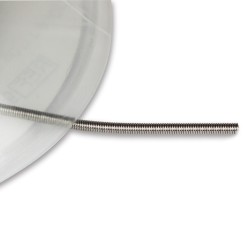
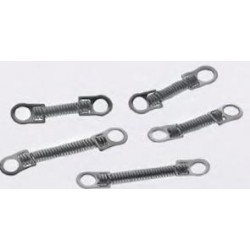

Supplier: IOS Intl. Orthodontic Services
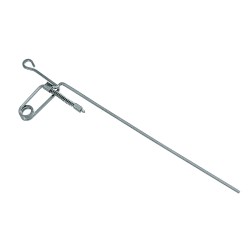
-250x250.jpg "Dentaflex® Wire On Coils, Round, 3-Strand Twisted, Super Spring Hard - 1 piece")
Supplier: Dentaurum Inc.

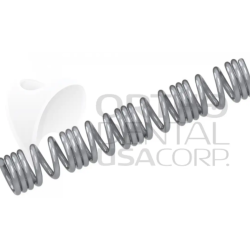

Supplier: Smile Stream Solutions, Inc.