
Interproximal Strips
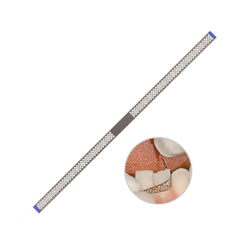
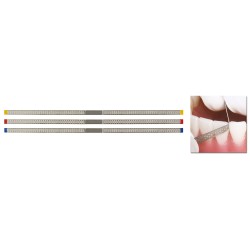
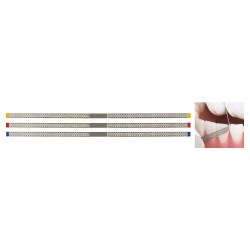
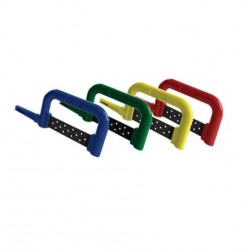
Interproximal Strips for IPR, Contact Finishing, and Polishing
In this section of the Orthazone online store, you’ll find interproximal strips - strips for controlled interproximal reduction and finishing of contact points. Orthodontists and general dentists use them every day for IPR, polishing after restorations, and fine-tuning contacts in the area of braces. Here you can select orthodontic interproximal strips that match your clinical protocols and always have reliable tools for working in the contact area without risking adjacent teeth and restorations. The assortment of interproximal strips for sale is curated to meet the needs of both pure orthodontic and mixed practices, and is easily combined with rotary finishing systems such as Diamond Burs and Diamond & Econo Disks.
The role of interproximal strips in modern orthodontics and restorative dentistry
Interproximal strips have become a standard part of modern protocols in both orthodontics and restorative dentistry. Orthodontic interproximal strips allow you to perform interproximal reduction in a controlled, stepwise way without the aggressive intervention that often accompanies work with disks and burs.
In restorative dentistry, dental finishing strips are an important tool for finishing contact points after fillings, inlays, veneers, and other composite or ceramic restorations. A strip gives the clinician tactile control, helping gently smooth the transition between composite and enamel and create a smooth, physiologic contact without overhangs or food traps.
Main clinical tasks solved by interproximal strips
Controlled interproximal reduction (IPR)
IPR (interproximal reduction) is a controlled reduction of enamel thickness in the contact area to create additional space for alignment without extractions or excessive arch expansion. For these tasks, clinicians use interproximal reduction strips dental and dedicated IPR strips for orthodontics.
Compared to more aggressive methods (diamond disks and burs), strips give you the ability to control the amount of reduction step by step, work only at the contact point, and avoid undesired areas. Interproximal enamel reduction strips in different abrasiveness levels let you start with more aggressive reduction and then move to smoothing and polishing, preserving enamel as much as possible outside the working zone.
Contact finishing and polishing after restorations
After placing a filling, inlay, or veneer, the contact point often needs additional refinement. Dental finishing strips help remove overhanging composite, refine the contact, and eliminate roughness and micro-steps. This is essential for plaque control and prevention of secondary caries.
For delicate finishing, clinicians use interproximal polishing strips dental – softer, polishing strips that smooth the interface between material and enamel. In the esthetic zone, solutions from the dental interproximal strips for composite group are especially useful, helping to create a smooth, easy-to-clean surface and a stable contact without a “wedge” sensation for the patient. For broader finishing and polishing tasks, many practices also use systems from the Restorative Finishing/Polishing category.
Orthodontics and work around braces
In orthodontic protocols, orthodontic finishing strips are used not only for IPR but also for contact adjustment during treatment and after debonding. Strips help remove small overlaps, refine contact form, and improve self-cleaning of interproximal spaces.
Using dental interproximal strips for braces, the clinician can carefully refine contact zones without damaging brackets, archwires, or existing restorations. This is especially important when working around composite bonding and esthetic restorations, and pairs well with rotary finishing systems like Ortho Finishing Burs/Points.
Types of interproximal strips and their features
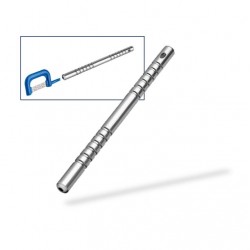
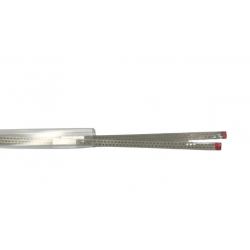
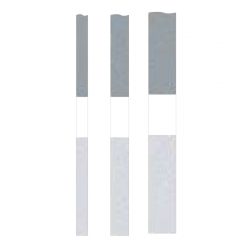
The category includes different types of interproximal strips, each with its own indication and handling characteristics. More flexible strips are designed for delicate finishing, while stiffer ones are intended for initial enamel or composite reduction. There are single-sided strips, with abrasive on only one side, and double-sided strips for more intensive work.
In terms of abrasiveness, interproximal enamel reduction strips are typically divided into coarse, medium, and fine. Coarse strips are used for primary space creation (for example, during IPR), medium for leveling and shape refinement, and fine as the final step when you need to smooth the surface and prepare it for final polishing or leave it as is if the surface is already sufficiently smooth. Different widths and lengths help you select the optimal strip for tight anterior contacts or broader posterior spaces.
How to choose orthodontic interproximal strips for your clinical protocol
For a purely orthodontic practice, it makes sense to build a kit centered on IPR strips for orthodontics and orthodontic finishing strips. In one cassette, it’s convenient to have several abrasiveness levels: coarse for initial space creation and fine for enamel smoothing. Such a kit makes it easier to standardize IPR protocols and keep results predictable for the entire team.
In a mixed practice, where restorative and orthodontic work are combined, you should balance interproximal reduction strips dental with dental finishing strips. This allows you to handle both controlled IPR and contact finishing after restorations. Esthetically oriented practices should pay special attention to dental interproximal strips for composite and polishing strips, which deliver smooth contacts without chipping or roughness in the smile zone.
When forming your set, first define which tasks you perform most often—IPR, contact finishing after fillings, refinement of contacts around braces—and then choose the right combination of strips by abrasiveness, width, and format.
Interproximal strips for sale and supply for clinics in the USA
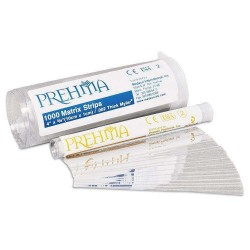
At Orthazone, you’ll find interproximal strips for sale in multiple formats: grit-based kits, assorted sets oriented toward IPR or restorative finishing, and packs of the most frequently used strips. This is convenient for single-chair offices, multi-chair orthodontic practices, and group clinics alike.
The interproximal strips assortment is designed so you can either assemble a compact basic kit or expand it with specialized solutions tailored to particular protocols. For larger clinics and groups, standardized kits can be used across operatories, ensuring a consistent approach to IPR and contact finishing for every provider.
Buy interproximal strips online at Orthazone
Online ordering makes strip selection simple and transparent. In the Interproximal Strips section you can buy interproximal strips online using filters by indication (IPR, finishing, polishing), abrasiveness, and format (single strips, cassette systems, assorted kits). This saves time for both clinicians and purchasing staff, and helps you prepare sets in advance for your planned treatment protocols.
Another advantage is that dental interproximal strips for braces and related solutions can be ordered together with diamond burs, disks, and other orthodontic instruments in a single shipment. Many clinics, for example, combine interproximal strips with Diamond Burs and Diamond & Econo Disks to build complete finishing and IPR workflows. This simplifies logistics, reduces the number of separate orders, and allows centralized purchasing for the entire practice.
FAQ: choosing and using interproximal strips
When is it better to use interproximal reduction strips dental instead of disks?
Interproximal reduction strips dental are more convenient when you need maximum control over the amount of reduction and want to work only in the contact area without touching adjacent regions. Strips are especially useful for smaller amounts of IPR, in sensitive zones, and around existing restorations where disks or burs may be too aggressive.
Which orthodontic finishing strips should I choose for contact finishing after orthodontic treatment?
For finishing contacts after debonding, choose delicate orthodontic finishing strips with fine grit. They allow you to smooth roughness, remove small composite overhangs, and create a physiologic contact without introducing new irregularities. In areas with esthetic restorations, it is better to use softer strips with a polishing surface.
How do I select interproximal polishing strips dental for composite work?
For composite, it is best to use interproximal polishing strips dental with gentle abrasiveness or combined abrasive/polishing coatings. They help smooth the transition between composite and enamel, remove minor excess and micro-steps, and create a surface that resists staining and plaque accumulation. Products from the dental interproximal strips for composite group are specifically designed for these tasks.
What is the minimum interproximal strips kit for a universal practice?
A basic kit for a universal practice typically includes several abrasiveness levels of interproximal strips: coarse for initial reduction, medium for leveling, and fine for polishing. Adding a few specialized dental finishing strips for composite and restorations, plus one or two types of IPR strips for orthodontics, will cover most everyday needs—from contact correction to controlled IPR in orthodontic cases.
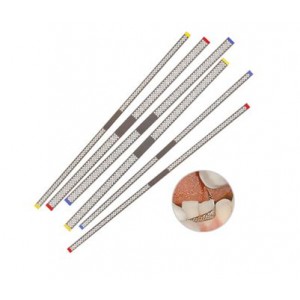











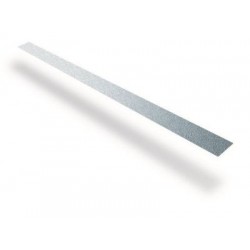
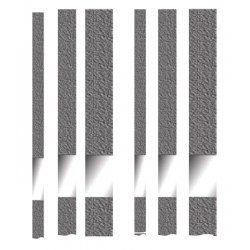
-250x250.png "Diamond Strips SS With Gap (6pk)")