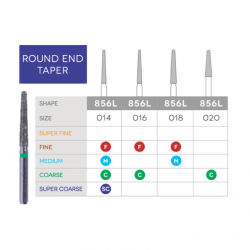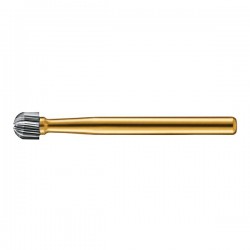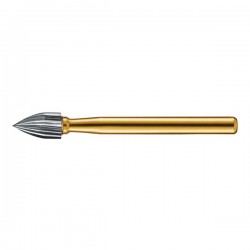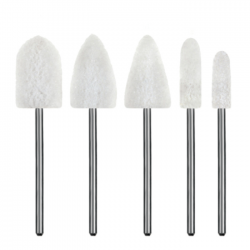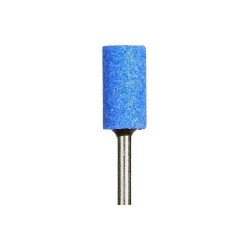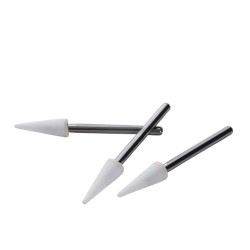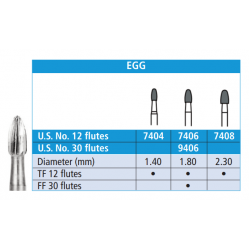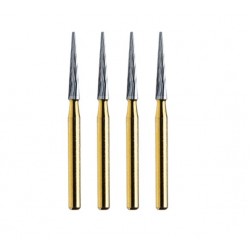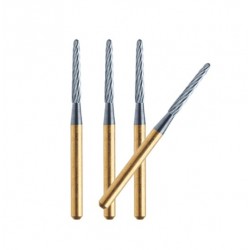

Ortho Finishing Burs/Points
Ortho Finishing Burs and Points for Orthodontic Debonding and Enamel Polishing
Welcome to Orthazone, your online orthodontic supply store. In this section, we’ve brought together specialized ortho finishing burs and points for enamel finishing after orthodontic treatment. Here you’ll find orthodontic finishing burs and points used during bracket removal, adhesive cleanup, enamel smoothing, and final polishing. Our finishing burs assortment is curated specifically for orthodontists across the United States – after many years in the orthodontic market, we understand what doctors value in their instruments. The goal of this category is to help orthodontists quickly assemble a convenient set of tools for precise debonding and finishing so that teeth look esthetic and feel comfortable at the end of treatment.
The role of orthodontic finishing burs and points after debonding
When braces come off, treatment is not truly finished – the final result depends heavily on the finishing phase. This is where orthodontic finishing burs and orthodontic finishing points come into play. They allow you to gently remove adhesive remnants, even out enamel surfaces, and prepare the tooth for polishing.
A well-structured finishing protocol using dental finishing burs for orthodontics helps reduce postoperative sensitivity, prevents rough areas and staining, and gives patients the “final smile” they expect after months or years of treatment with braces or aligners.
Main clinical tasks for finishing burs and points in orthodontics
Adhesive and composite removal after bracket debonding
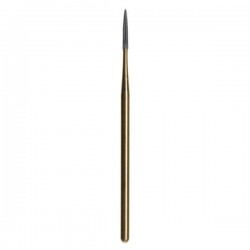
The first task after bracket removal is safe elimination of adhesive and composite. For this step, clinicians use orthodontic debonding burs and other finishing burs for orthodontics that gradually remove adhesive without cutting too deeply into enamel.
Properly selected burs give good tactile feedback: you can feel when you are working on adhesive versus tooth structure. This is especially important in the esthetic zone, where any unnecessary enamel loss quickly becomes visible. As a complement in tight contact areas, some clinicians also use finishing strips from the Interproximal Strips category.
Enamel finishing and surface smoothing
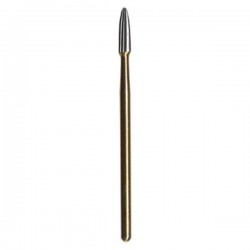
After most of the adhesive has been removed, small irregularities and micro-roughness remain. At this stage, orthodontic enamel finishing burs and more delicate dental finishing burs for orthodontics become the primary instruments.
Their role is to smooth transitions, remove microsteps left by more aggressive tools, and level the surface. This creates the foundation for an even, glossy finish and uniform light reflection so that treated teeth look natural and blend with untouched areas.
Final polishing after finishing
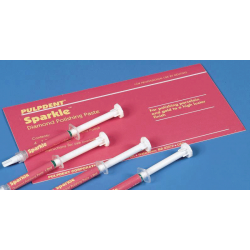
Enamel finishing is not the final step. To achieve a smooth, glossy, and easy-to-clean surface, you then move to orthodontic polishing burs and orthodontic polishing points.
These instruments complete the sequence: they reduce micro-roughness, improve surface feel, and make plaque accumulation less likely. Polishing burs for orthodontics help lock in the result of your finishing work, leaving the enamel pleasant to the tongue and visually “closing” the case with a high-quality shine. For multi-step polishing protocols, you can also combine them with systems from the Restorative Finishing/Polishing category.
Types of ortho finishing burs and orthodontic finishing points
The category includes several types of ortho finishing burs and orthodontic finishing points:
- Carbide finishing burs for more active adhesive and composite removal;
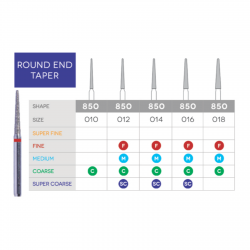
- Fine diamond finishing burs for controlled work on enamel;
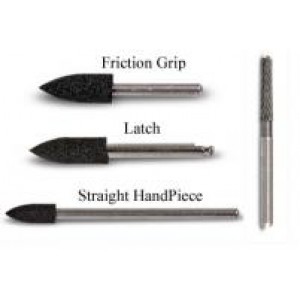
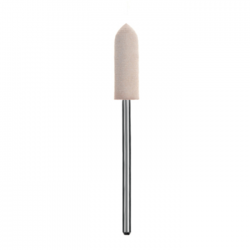
- Rubber and silicone points for smoothing and polishing at different stages;
- Multi-step systems where each bur or point corresponds to a specific level of abrasiveness.
In practice, you choose between a bur and a point based on the clinical task. When you need to remove material but preserve enamel, gentler finishing burs are appropriate; when the surface is already refined and you want to reach high gloss, polishing points are usually the best choice.
How to choose finishing burs for orthodontics for your protocol
When selecting finishing burs for orthodontics, it is helpful to structure your protocol in three steps:
- Removal of the bulk of adhesive (debonding).
- Enamel finishing (smoothing and evening out the surface).
- Final polishing to a high gloss.
For a minimal setup, you typically need:
- One or two types of orthodontic debonding burs to remove adhesive and composite;
- Several orthodontic enamel finishing burs for work on enamel;
- A couple of orthodontic polishing burs or points for the final polish.
If your practice has a strong esthetic focus (adult patients, esthetic brackets, complex cases), it makes sense to expand your selection of dental finishing burs for orthodontics and add more finely graded levels of abrasiveness to work as gently as possible on enamel.
Orthodontic finishing and polishing kits for clinics and group practices
For multi-chair offices and group practices, ready-made orthodontic finishing and polishing kits are especially convenient. These kits include a logical set of orthodontic finishing burs and points that cover the standard protocol from debonding to final polishing.
Kits simplify assistant training, reduce the risk of accidentally choosing overly aggressive instruments, and help ensure that all required tools are available at chairside. The doctor knows that everything needed for high-quality orthodontic finishing is contained in one kit and organized in a predictable way. For storage, many practices use bur organizers from the Bur Blocks category.
Practical use: combining burs and points
In real clinical workflows, the finishing phase often follows a three-step sequence:
- Orthodontic debonding burs – careful removal of the main adhesive and composite volume.
- Orthodontic enamel finishing burs – smoothing the surface and removing scratches and irregularities.
- Orthodontic polishing burs or orthodontic polishing points – polishing to a smooth, glossy, and easy-to-clean surface.
Skipping steps is not recommended. If you jump straight to polishing, some roughness will remain; if you spend too long with aggressive instruments, the risk of enamel damage increases. A balanced combination of burs and points lets you achieve an even, esthetic surface while preserving as much healthy tooth structure as possible.
FAQ: choosing ortho finishing burs and points
Which ortho finishing burs are best for debonding?
For debonding, more active but still controlled orthodontic debonding burs are recommended. They efficiently remove adhesive and composite while allowing you to stop in time. Many clinicians then switch to less aggressive finishing burs to refine the surface before polishing.
What is the difference between orthodontic finishing burs and orthodontic finishing points?
Orthodontic finishing burs are primarily used to shape and smooth the surface, remove small amounts of adhesive, and refine enamel. Orthodontic finishing points (often rubber or silicone) are typically softer and used mainly at the finishing and polishing stages. Ideally, they complement each other rather than replace one another.
Which orthodontic polishing burs are best for final enamel polishing?
For the last stage, gentle orthodontic polishing burs and orthodontic polishing points designed for low pressure and minimal tooth reduction work best. They smooth the surface, reduce micro-roughness, and help achieve a long-lasting, high-quality shine that is comfortable for the patient.
Do I really need orthodontic finishing and polishing kits, or are individual burs enough?
For a solo practitioner, building a personal set from individual dental finishing burs for orthodontics can be sufficient. However, in multi-chair clinics and larger teams, ready-made orthodontic finishing and polishing kits are often more practical – they include the essential instruments in a standardized layout so the entire team can follow the same, predictable protocol.