
Bulk Fill Composites
Bulk Fill Composites for Posterior Restorations
The Bulk Fill Composites section brings together materials for fast and efficient restoration of posterior teeth and deep cavities. Here you’ll find modern bulk fill composites that allow you to place material in larger increments, reduce the number of layers, and still achieve predictable results. This catalog is designed for clinicians who need a reliable bulk fill dental composite and easy-to-handle bulk fill composite resin for posterior teeth and complex cavities in everyday practice.
The role of bulk fill composites in modern posterior restorations
Integrating bulk fill composites into daily workflows is a straightforward way to save chair time without compromising quality. Instead of multiple thin layers, you can use an optimized bulk fill composite material that cures to greater depths and simplifies the restorative protocol. This is especially valuable when treating many carious lesions during a single day.
For posterior teeth, a well-chosen bulk fill posterior composite makes it easier to rebuild anatomy, shorten chair time, and reduce the risk of errors associated with too many separate steps. With the right bonding system and placement technique, a bulk fill composite dental restorative becomes a convenient go-to material for routine posterior restorations.
Main clinical indications for bulk fill dental composite
Bulk fill posterior composite for molar restorations
Most often, bulk fill posterior composite is used when treating molars and premolars where both strength and speed matter. These areas are heavily loaded, so a high-quality bulk fill composite for molars must offer excellent wear resistance, stable contact with cavity walls, and predictable performance under functional stress.
With a suitable bulk fill composite material, you can quickly restore lost tooth structure and then refine anatomy and contacts using finishing instruments and polishing systems. This approach is particularly helpful for patients who struggle to tolerate long appointments and for clinicians managing high-volume restorative schedules.
Flowable bulk fill composite as a liner and stand-alone material
Flowable bulk fill composite plays a special role as both an adaptive liner and, in some indications, as a stand-alone restorative material in less heavily loaded areas. A flowable bulk fill dental composite adapts well to the floor and walls of the cavity, helping reduce the risk of voids and bubbles.
In many protocols, dentists combine flowable bulk fill composite with more highly filled packable composites or with materials from the Flowable Composites category, selecting viscosity according to the clinical situation. This flexible approach allows you to tailor your technique to almost any cavity class.
Key properties of bulk fill composite resin and bulk fill restorative material
Modern bulk fill composite resin is engineered around three main parameters: depth of cure, shrinkage control, and handling. A quality light-cure bulk fill composite must reliably polymerize to the stated depth under proper light exposure – this is critical for long-term stability and performance.
Many products also fall into the low-shrinkage bulk fill composite category, offering reduced polymerization shrinkage. This helps lower stress on cavity walls and reduces the risk of marginal gaps and postoperative sensitivity. When choosing a bulk fill restorative material, it’s important to consider both its mechanical properties and compatibility with your adhesive systems and etching protocols – for example, universal bonding solutions from the Dental Bonding Agents section and etchants from Etching Gels.
How to choose a bulk fill composite material for your protocol
Your choice of bulk fill composite material depends on the types of cases you see most often: deep cavities, Class I and II restorations, restorations on molars, or combined situations. If speed is the top priority, a highly filled bulk fill composite dental restorative for posterior teeth may be ideal. If adaptation in complex cavity shapes is more critical, consider combining bulk fill with flowable materials or liners.
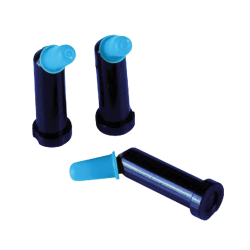
It’s also worth thinking about presentation and organization. Many clinicians prefer using unit-dose or syringe-based bulk fill composite resin together with accessories from the Dental Syringes section and storage options from Dental Jars. Thoughtful material management helps you use bulk fill composites efficiently and keep the operatory workflow smooth.
Bulk fill composites USA and ordering through Orthazone
Orthazone offers a wide selection of bulk fill composites USA, tailored to the needs of American dental practices. In this section, you can Buy bulk fill composite online while simultaneously adding bonding agents, etching gels, flowable composites, and other accessories needed for a complete restorative protocol.
Online ordering simplifies inventory management: you can review available bulk fill dental composite options, quickly repeat successful orders, and receive everything in a single shipment. For your clinic, this means less time spent on procurement and more time for patient care, while protocols based on bulk fill composites remain stable and predictable.
FAQ about bulk fill composite dental restorative
Can bulk fill composites completely replace traditional layered techniques?
In many cases, bulk fill composites let you reduce the number of layers and speed up treatment, but that doesn’t always mean abandoning layering entirely. In esthetic zones or cases with complex anatomy, clinicians often combine bulk fill composite resin with conventional composites – using bulk fill for the core volume and separate enamel shades for the final surface layer.
Is it safe to use bulk fill posterior composite in very deep cavities?
When you respect the manufacturer’s recommendations for layer thickness and curing time, a bulk fill posterior composite can deliver adequate depth of cure and long-term stability. It is crucial to monitor the output of your curing light and the distance to the material. For very deep or complex cavities, many clinicians place a flowable bulk fill composite as an adaptive liner before building up the remaining volume.
Does a low-shrinkage bulk fill composite really reduce postoperative sensitivity?
A low-shrinkage bulk fill composite can help reduce stress on cavity walls and lower the risk of marginal gaps and microcracks, which are potential contributors to sensitivity. However, sensitivity is also influenced by how well the adhesive protocol is followed, the quality of tooth preparation, and curing conditions. The bulk fill restorative material should be viewed as part of a complete system that includes bonding agents and etching techniques.
When should I choose a flowable bulk fill composite instead of only a packable composite?
A flowable bulk fill composite is particularly useful when you need excellent adaptation to cavity walls: in complex configurations, deep areas, or hard-to-reach zones. The flowable layer helps eliminate undercuts and micro-voids, after which you can continue the build-up with a more highly filled bulk fill dental composite or another packable material. This combined approach enhances reliability and makes your restorative protocol more flexible.