

Endodontic Instruments
Professional Endodontic Instruments for Root Canal Treatment
The Endodontic Instruments category focuses on the tools required for safe and predictable root canal therapy. Here you will find a complete range of dental endodontic instruments for diagnosis, canal scouting, cleaning, shaping, and obturation. Orthazone helps general dentists, endodontists, and dental clinics across the USA configure practical sets of professional endodontic instruments that match their endodontic protocols.
The role of endodontic instruments in root canal treatment
Successful endodontic therapy depends on the quality and design of the endodontic instruments used throughout the procedure. Well-chosen root canal instruments support controlled mechanical preparation, effective irrigation, and dense obturation of the canal system. They influence working length control, canal taper, preservation of anatomy, and the risk of ledging, transportation, or instrument separation.
Whether in general practice or a specialist setting, dental endodontic instruments shape the outcome of treatment. They work together with irrigants, sealers, and restorative materials from categories like Cements & Liners, Dental Burs and the restorative options in Cosmetic & Restorative Dentistry to restore function and esthetics after root canal treatment.
Main groups of endodontic instruments
Diagnostic and scouting instruments
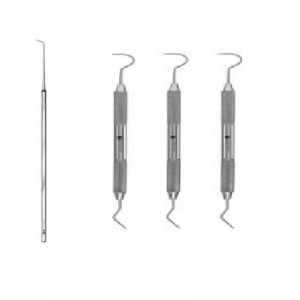
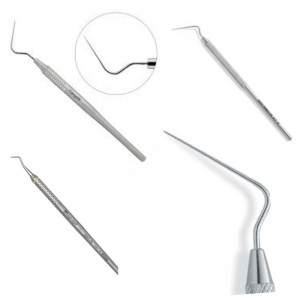
Before any shaping begins, diagnostic endodontic instruments for root canal treatment help locate canal orifices, evaluate patency, and assess pulp status. These tools include endodontic explorers, small hand files used as scouts, accessories for apex locators, and pulp testers. Together, they form a key subset of root canal instruments that support decisions about whether to treat, retreat, or refer.
Accurate diagnosis and canal scouting at this stage reduce procedural risks, provide a clearer picture of root anatomy, and improve the reliability of working length determination.
Endodontic hand instruments for cleaning and shaping
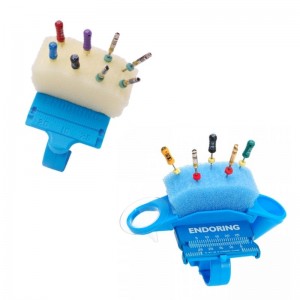
Endodontic hand instruments remain the backbone of canal preparation even in offices that use rotary or reciprocating systems. Hand files and reamers are used to establish a glide path, negotiate curved or calcified canals, and refine apical preparation. These tools are central to endodontic instruments for root canal cleaning and shaping, especially in anatomically challenging cases.
Hand files, used in combination with irrigants delivered through endodontic irrigating needles, help remove infected tissue and debris while respecting the natural curvature of the canal. For many clinicians, reliable hand endodontic instruments are essential for managing difficult anatomy and preventing procedural errors.
Instruments for obturation and condensation
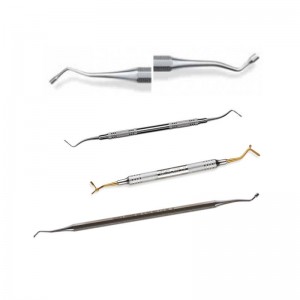
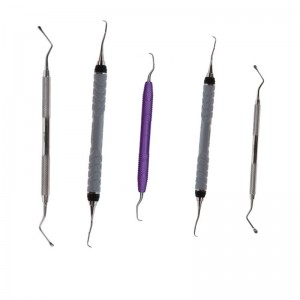
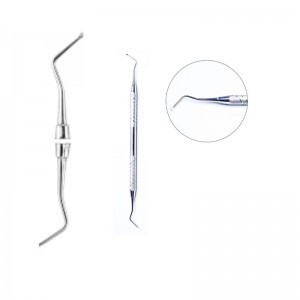
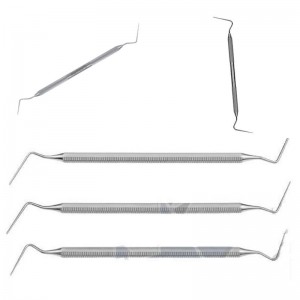
Once the canal has been cleaned and shaped, dedicated obturation root canal instruments are used to compact gutta-percha and sealer into the prepared space. These include endodontic spreaders and pluggers for lateral and vertical condensation, carriers for warm obturation techniques, and accessory tools for removing excess material and shaping the coronal seal.
While these instruments may not alter canal geometry, they are a critical component of a complete set of dental endodontic instruments, helping to achieve dense, three-dimensional fills that support long-term success.
Endodontic instrument sets and kits
A well-organized endodontic instruments set combines diagnostic, cleaning, shaping, and obturation tools into a coherent layout. A basic kit for general practice may include explorers, hand files, and a small selection of spreaders and pluggers, while a more comprehensive endodontic instruments kit for specialists may add additional file sizes, accessory instruments, and advanced obturation tools.
For dedicated endodontic providers, endodontic instruments for endodontists typically feature a broader range of file sizes and tapers, specialized hand instruments for retreatment and complex anatomy, and accessories that support microscope-assisted procedures.
Users and applications: general dentists, endodontists, and clinics
Endodontic instruments for dentists in general practice
Endodontic instruments for dentists in general practice focus on predictable management of straightforward cases. Typical needs include basic diagnostic instruments, a core series of hand files for glide path and shaping, and a small selection of spreaders and pluggers for obturation. With these tools, many anterior and single-rooted posterior cases can be treated safely and efficiently.
Clear boundaries can then be drawn between cases suitable for general practice and those best referred to a specialist - for example, severe curvature, retreatments, calcified canals, or complex multi-rooted teeth.
Endodontic instruments for dental clinics and group practices
In multi-operatory environments, standardized endodontic instruments for dental clinics ensure that each treatment room is prepared for root canal therapy. Clinics often create dedicated endodontic trays containing diagnostic scouts, endodontic hand instruments, obturation tools, and accessories for irrigation and working length determination.
This standardized approach allows different providers to work comfortably in any operatory and simplifies sterilization logistics. Coordinated sets of root canal instruments also make it easier to track inventory and plan replacements.
Endodontic instruments for endodontists
Endodontic instruments for endodontists are typically more extensive and specialized. In addition to basic hand files and spreaders, specialist setups may include a wide variety of small and specialty files, instruments for negotiating calcified canals, retreatment tools, and accessory instruments used under magnification.
For these clinicians, high-quality professional endodontic instruments are indispensable when treating complex curvatures, multi-rooted teeth with unusual anatomy, or previously treated canals requiring retreatment.
How to choose endodontic instruments
Metal quality, flexibility, and fracture resistance
When selecting professional endodontic instruments, it is important to consider alloy type, flexibility, and resistance to cyclic fatigue. Well-engineered root canal instruments should navigate curves without undue stress, maintain cutting efficiency, and provide tactile feedback without excessive stiffness.
Instrument separation in the canal can be a significant complication, so investing in high-quality dental endodontic instruments with predictable mechanical behavior is a key part of risk management in endodontic practice.
Instrument sets versus individual selection
Preconfigured endodontic instruments set and kit options provide an easy starting point for outfitting a new operatory or practice. They typically offer logical sequences of sizes and tapers, making it easier for clinicians to follow structured protocols for endodontic instruments for root canal cleaning and shaping.
As experience grows, many clinicians refine their armamentarium by adding or replacing specific instruments. A standard endodontic instruments kit can be customized with additional file sizes, specialty hand instruments, and alternative obturation tools to better match the preferred technique and case mix.
Sterilization, lifespan, and cost efficiency
Repeated sterilization and use in curved canals place significant stress on endodontic hand instruments. Regular inspection for unwinding, distortion, or signs of fatigue is essential, and instruments showing early damage should be retired promptly. Establishing clear replacement intervals reduces the risk of unexpected fracture.
Ordering endodontic instruments online through Orthazone allows clinics and endodontic centers to monitor usage patterns, standardize their instrument lines, and maintain adequate stock of critical sizes. Planning ahead to buy endodontic instruments in appropriate quantities helps avoid mid-procedure shortages and supports smoother scheduling.
Endodontic Instruments at Orthazone
Assortment and catalog navigation
The Endodontic Instruments section at Orthazone offers a focused selection of dental endodontic instruments for both general dentists and specialists. You will find:
- core endodontic hand instruments for canal scouting, cleaning, and shaping,
- complete endodontic instruments set and kit options for full root canal procedures,
- individual replacement instruments to refresh existing kits or customize your armamentarium.
Catalog filters make it easy to sort by instrument type (diagnostic, cleaning/shaping, obturation), size, taper, and clinical indication, helping you identify the right endodontic instruments for dental clinics and specialist practices.
Building standardized endodontic trays
Using Orthazone, practices can define standardized endodontic trays that include diagnostic scouts, hand files for glide path and shaping, and obturation instruments. These configurations help ensure that each operatory has access to a complete set of endodontic instruments for root canal treatment whenever needed.
Standardized trays also integrate smoothly with other chairside tools and materials from categories such as Dental Burs, Cements & Liners, and restorative materials in Cosmetic & Restorative Dentistry, supporting a comprehensive restorative plan after root canal therapy.
Online ordering and shipping across the USA
Orthazone provides a convenient way to buy endodontic instruments for solo practices, group clinics, and endodontic specialty centers. By sourcing professional endodontic instruments from a single platform, purchasing teams can standardize product lines, simplify reordering, and maintain consistent setups across multiple chairs and locations.
Fast, reliable shipping throughout the United States ensures that your endodontic trays remain fully stocked, supporting efficient, high-quality care for patients requiring root canal treatment.
Practical use cases for Endodontic Instruments
Primary root canal treatment
In a typical primary RCT case, the clinician uses diagnostic root canal instruments to locate canal orifices, determine working length, and assess patency. Next, endodontic hand instruments are used to create a glide path and shape the canals to the desired taper, followed by irrigation and obturation using spreaders, pluggers, and other obturation tools.
Retreatment and complex anatomy
Retreatment and complex cases demand more from professional endodontic instruments. Negotiating calcified canals, bypassing ledges, and removing residual filling material require carefully selected hand instruments and accessories. In these situations, specialist-level endodontic instruments for endodontists support safe progression while preserving as much tooth structure as possible.
Endodontics in general practice and referral decisions
For many dentists, a well-defined set of endodontic instruments for dentists helps distinguish which cases can be handled in-house and which should be referred. Straightforward single-rooted teeth may be treated with a basic endodontic instruments kit, while teeth with severe curvature, complex root morphology, or prior treatment history are more appropriately managed by a specialist.
FAQ
What is typically included in a basic endodontic instruments set for a clinic?
A basic endodontic instruments set usually includes endodontic explorers, a series of hand files for canal scouting and shaping, and obturation instruments such as spreaders and pluggers. Many clinics also add irrigating needles and accessories for working length determination.
How do endodontic instruments for dentists differ from endodontic instruments for endodontists?
Endodontic instruments for dentists in general practice are geared toward routine, relatively simple cases and emphasize core sizes and basic tools. Endodontic instruments for endodontists often include a wider range of file sizes and tapers, specialty instruments for calcified or curved canals, and additional tools for retreatment and complex anatomy.
How often should endodontic hand instruments be replaced?
The lifespan of endodontic hand instruments depends on case complexity and frequency of use. Instruments should be inspected regularly for unwinding, distortion, or signs of metal fatigue and replaced at the first indication of damage. Establishing a clear replacement protocol helps reduce the risk of instrument fracture inside the canal.
Can I standardize endodontic kits for a group of clinics and order them online?
Yes. Through Orthazone, you can configure standard endodontic trays and buy endodontic instruments online to replicate those setups across multiple operatories or locations. This approach simplifies training, improves consistency in endodontic procedures, and streamlines purchasing for group practices and DSOs.



Supplier: Ortho Technology