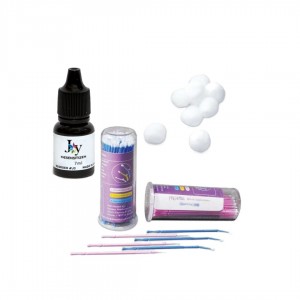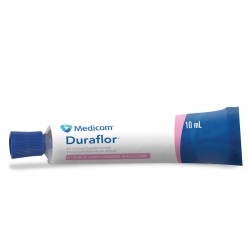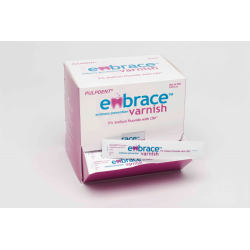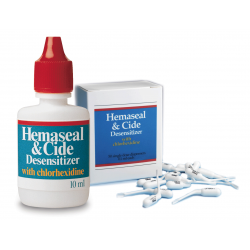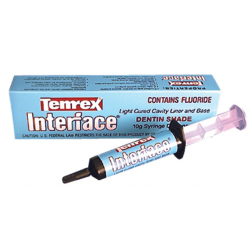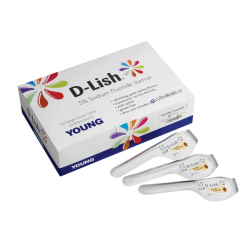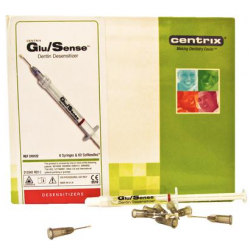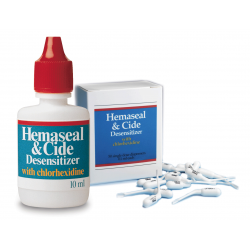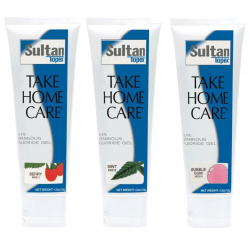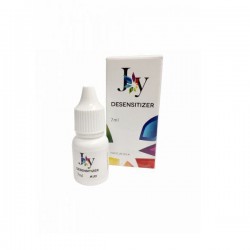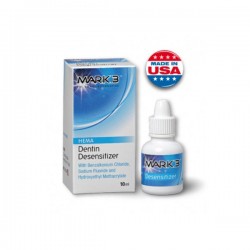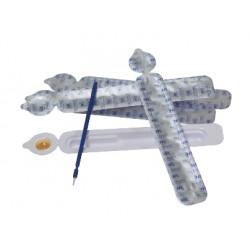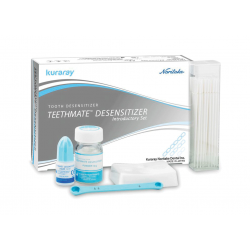

Dentin Desensitizers
Dentin Desensitizers for Professional Dentin Hypersensitivity Treatment
The Dentin Desensitizers category brings together materials used to reduce dentin sensitivity before and after treatment. These products help control tooth response to cold, heat, air, and mechanical stimuli, especially after preparation and in cases of exposed dentin. This section is designed for clinicians who want to systematically use Dentin desensitizers, select the right Dental dentin desensitizer for different clinical situations, and always have a reliable Tooth desensitizer available in daily practice.
The role of dentin desensitizers in sensitivity control
Dentin desensitizers have become a key part of treatment protocols where the goal is not only to remove caries or restore tooth anatomy, but also to ensure patient comfort. These agents reduce hypersensitivity, lower pain reactions during and after treatment, and make procedures much more tolerable for patients.
In many cases, Dentin hypersensitivity treatment products are not just an “optional extra” but a mandatory step: when preparing deep cavities, treating exposed dentin in the cervical area, and before placing restorations or crowns. A properly selected desensitizer supports the tooth at a stage when it has not yet adapted to new loads and conditions.
Key clinical indications for Dental dentin desensitizer
Tooth desensitizer for hypersensitivity and exposed dentin
When a patient reports sharp pain in response to cold water, air, or sweets, it often points to dentin hypersensitivity. In such situations, a Tooth desensitizer can be used as a stand-alone procedure or as part of a comprehensive treatment plan.
With the help of Dentin hypersensitivity treatment products, you can treat exposed cervical areas, zones of gingival recession, thinned enamel, and open dentinal tubules. This reduces pain intensity, improves quality of life between visits, and helps patients tolerate further procedures more easily.
Dentin desensitizer for restorative dentistry before restorations and cementation
Another important scenario is using a Dentin desensitizer for restorative dentistry before adhesive restorations and cementation of crowns or inlays. After preparation, dentin often becomes highly sensitive, and treating the tooth with a desensitizer helps “calm” it before applying adhesive and cement.
In this protocol, the Dental dentin desensitizer becomes the intermediate link between mechanical preparation and the final restoration. This is especially relevant when working with extensive cavities, preparations for indirect restorations, and patients with baseline hypersensitivity. After desensitization, you can move on to adhesives and cements from the Cements & Liners category to complete the case.
Types of desensitizing agents for dentin and their features
Under the umbrella of Desensitizing agents for dentin you’ll find several product groups: agents that occlude dentinal tubules, formulations with remineralizing or fluoride effects, and special primers with desensitizing action. Each group acts on dentin in its own way, but the goal is the same - to reduce stimulus transmission to the pulp.
A Dental dentin desensitizer can come as a liquid, gel, or primer and may sometimes combine several functions: desensitizer + adhesive component, or desensitizer + dentin-strengthening agent. The choice of a specific product depends on lesion depth, the planned restorative material, and the clinician’s preferred protocol.
Professional dentin desensitizers for clinics and private practices
Professional dentin desensitizers differ from over-the-counter “sensitive teeth” products by their concentration of active ingredients, controlled application protocol, and predictable effect. These are not just “recommended pastes” but clinical tools used in the operatory.
For clinics and private offices, using a Dentin desensitizer for dentists makes it possible to standardize the approach to dentin sensitivity: instead of ad-hoc solutions, you rely on well-defined steps with consistent outcomes. This increases patient satisfaction, reduces the number of complaints about postoperative pain, and helps make restorative appointments more comfortable overall.
How to choose a dentin desensitizer for dentists for your practice
When selecting a Dentin desensitizer for dentists, it’s important to consider several factors:
- type of hypersensitivity (localized or generalized, cervical areas or cavity surfaces),
- planned procedures (restorations, crowns, bridges, follow-up interventions),
- preferred format – liquid, gel, or primer.
The optimal approach is to choose one or two core Dentin desensitizers for typical scenarios and, if needed, supplement your lineup with more specialized products. In this way, the Dental dentin desensitizer becomes a permanent, everyday tool in your clinical workflow rather than a one-off purchase “just in case.”
Integrating dentin desensitizers into your restorative workflow
In a typical restorative protocol, desensitizers sit between mechanical preparation and the adhesive or cementation step. For controlled and conservative preparation, many dentists rely on burs from the Burs category, including more advanced options such as Gold Carbide Burs for precise cutting and margin refinement.
After preparation and finishing with systems like Restorative Finishing/Polishing, you can apply the selected Dentin desensitizers and then proceed to adhesives and cements from the Cements & Liners section. This stepwise protocol helps improve comfort, manage sensitivity, and build longer-lasting restorations.
FAQ about Dentin desensitizers
What is the difference between a Dental dentin desensitizer and an over-the-counter tooth desensitizer?
A professional Dental dentin desensitizer is designed for use in the dental office: it has a clearly defined protocol, controlled concentration, and predictable clinical effect. An over-the-counter Tooth desensitizer from mass retail products often acts more gently but less predictably and cannot replace in-office treatment when hypersensitivity is pronounced.
When are desensitizing agents for dentin enough, and when do I need to change the restoration or treatment plan?
If the problem is hypersensitivity without obvious signs of secondary caries, leakage, or restoration failure, using Desensitizing agents for dentin often provides good relief. But if sensitivity is accompanied by pain on biting, visible restoration defects, or marginal gaps, a desensitizer alone will not be sufficient - the restoration and treatment plan need to be reassessed.
Should I use a Dentin desensitizer for restorative dentistry after every preparation for a filling or crown?
It’s not mandatory in every case, but in many situations using a Dentin desensitizer for restorative dentistry after aggressive preparation, in deep cavities, or in patients with pre-existing sensitivity can significantly reduce discomfort. The decision is made by the clinician based on preparation depth, dentin condition, and the patient’s expected response.
How can I choose a Dentin desensitizer for dentists for a small practice focused mainly on restorative care?
For a small practice, one versatile Dentin desensitizer for dentists that works both for cavity treatment before restorations and for localized cervical hypersensitivity is usually enough, with the option to add a second, more specialized product if needed. A compact set of Professional dentin desensitizers covers most routine indications and helps establish a clear, repeatable protocol for managing sensitive teeth.