

Dental Finishing & Polishing
Dental Finishing and Polishing Materials & Systems
The Dental Finishing & Polishing category is dedicated to the final stage of restorative dentistry, from shaping anatomy to achieving a long-lasting gloss on enamel and composite. Here you will find a wide range of dental finishing and polishing materials and systems: discs, strips, cups, points, burs, and complete dental composite polishing kit options tailored to different techniques and clinical workflows.
The role of finishing and polishing in everyday restorative dentistry
High-quality dental finishing and polishing is not an optional “cosmetic extra” but an integral part of the restorative protocol. Proper composite finishing and polishing improves surface smoothness, reduces plaque retention, helps resist staining, and enhances patient comfort. Well-polished restorations are easier to maintain and contribute to the long-term success of both posterior and anterior cases.
Finishing and polishing complete the workflow that starts with adhesive protocols and restorative materials from the Cosmetic & Restorative Dentistry category. The same is true for composites placed from subcategories such as Flowable Composites and Bulk Fill Composites, and from adhesive systems in Dental Bonding Agents and Etching Gels. When esthetic composite finishing and polishing is done correctly, the restoration blends seamlessly with natural enamel, both visually and in terms of texture.
Main types of finishing and polishing materials and systems
Polishing discs for shaping and gloss
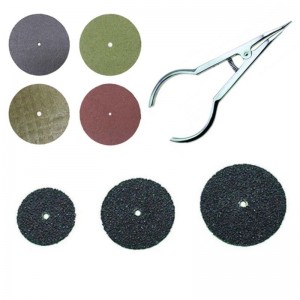
Dental polishing discs are a cornerstone of composite finishing and polishing, especially in anterior and cervical areas. They help refine contour, smooth transitions, and correct overhangs without creating flat, lifeless surfaces. Modern dental composite polishing discs are usually color-coded by grit, allowing clinicians to progress from coarse shaping to pre-polish and final high-gloss in a controlled sequence.
Discs are particularly useful along the facial surface of anterior teeth, on cervical margins, and in areas where rotary burs might leave unwanted scratches. When combined with proper matrix systems and interproximal contouring, dental composite polishing discs support precise anatomy and a natural light reflection pattern.
Finishing strips for interproximal and cervical areas
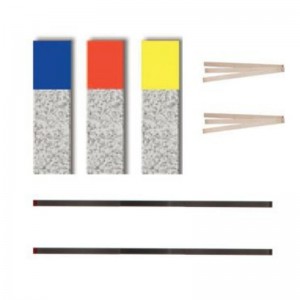
Dental finishing strips and interproximal finishing strips are designed for areas where discs and burs cannot safely reach, such as tight contact points and subcontact surfaces. They are used to remove overhanging composite, refine interproximal contours, and smooth the cervical region without damaging adjacent teeth.
These strips are especially valuable when finishing restorations placed with flowable or bulk-fill materials from the Flowable Composites and Bulk Fill Composites categories. Different grits allow the clinician to move from initial contouring to a refined, polished surface while preserving the integrity of contact points and soft tissues.
Polishing cups, points, and enamel instruments
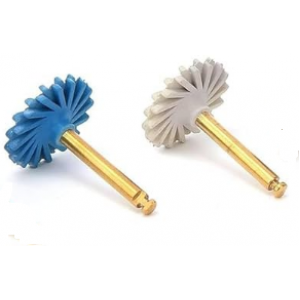
Dental polishing cups and points are typically used after initial contouring to create a uniform, glossy surface on both occlusal and smooth surfaces. Their shapes and elastic properties make them ideal for pits and fissures, marginal ridges, and complex occlusal anatomy.
For anterior esthetics, systems focused on esthetic composite finishing and polishing offer multi-step cups and points tuned to different microtextures and gloss levels. In addition, dental enamel polishing instruments are available for gentle enamel polishing after minor contouring, such as edge reshaping or smoothing of small enamel irregularities. This supports minimally invasive adjustments followed by a high-quality polish.
Burs, kits, and integrated polishing systems
Dental composite polishing burs are frequently used as the first step in shaping: defining primary and secondary anatomy, adjusting occlusion, and refining line angles. They bridge the gap between initial contouring with dedicated finishing burs and the subsequent use of discs and points.
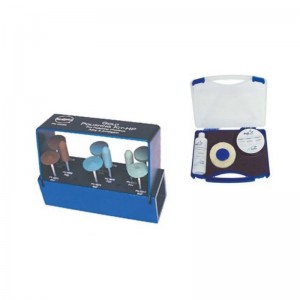
Many manufacturers offer complete dental composite polishing system solutions or pre-configured dental composite polishing kit options that combine burs, discs, strips, cups, and points into a single protocol. Some systems are specifically optimized for microfill and nanohybrid composite polishing, recognizing that microfilled and nanohybrid composites respond differently to abrasives and require tailored steps to achieve an enamel-like gloss without over-polishing or loss of texture.
Clinical indications and treatment scenarios
Finishing composite restorations
Once the composite is placed and light-cured whether from Flowable Composites, Bulk Fill Composites, or other Cosmetic & Restorative materials finishing and polishing begin with gross contouring. Dental composite polishing burs are used to shape occlusal anatomy, refine proximal contacts, and ensure that the restoration harmonizes with adjacent teeth.
Subsequent steps involve dental polishing discs, strips, and dental polishing cups and points to smooth the surface and create the desired shine. Proper composite finishing and polishing improves marginal integrity and helps the restoration visually disappear against the enamel background.
Enamel polishing after minor corrections
In minimally invasive cases such as small adjustments to incisal edges, elimination of minor chips, or contouring after occlusal equilibration dental enamel polishing instruments are used to restore a natural gloss. After minor shaping with finishing burs from the Dental Burs category, enamel is polished using fine points, cups, and pastes designed for hard tissue, preserving as much structure as possible.
This approach is ideal for cosmetic refinements, orthodontic finishing cases, and situations where the goal is to improve appearance with minimal intervention.
Esthetic cases and photo-driven restorations
In highly esthetic anterior cases, esthetic composite finishing and polishing is critical. After layering and contouring are completed, multi-step systems of discs, points, and cups are used to recreate natural microtexture and macrotexture, followed by a high-gloss finish that mimics enamel.
Such protocols are essential for photo documentation, patient communication, and long-term color stability. Properly executed dental finishing and polishing helps restorations behave optically like natural teeth under different lighting conditions, whether for chairside evaluation or before-and-after photography.
How to choose Dental Finishing & Polishing materials
Matching systems to composite type and restorative protocol
When selecting dental finishing and polishing materials, it is important to consider the type of composite in use. Microfilled materials may respond differently to abrasives than nanohybrid or bulk-fill composites, making dedicated microfill and nanohybrid composite polishing protocols a practical choice. Systems that work well on one composite line may not deliver the same gloss or texture on another.
Clinicians should also consider how a chosen dental composite polishing system integrates with their adhesive, composite, and matrix choices. A logical flow from placement to finishing reduces chairtime and variability while improving consistency across operators.
Multistep systems versus simplified protocols
Traditional finishing protocols rely on multistep sequences with several grits and instrument types, while newer systems may offer simplified, one- or two-step approaches. A classic, multi-step dental composite polishing system tends to provide the highest level of control and esthetics, especially in anterior cases and for demanding patients.
However, simplified kits can be ideal for busy practices and posterior-only indications, where a fast and predictable result is more important than achieving a perfect “showcase” gloss. When choosing between them, consider the balance between esthetic demands, available chairtime, and the practice’s overall restorative profile.
Ergonomics, efficiency, and cost-effectiveness
The design of a dental composite polishing kit affects both ergonomics and efficiency. Systems that minimize the number of instrument changes can save time, but may offer less fine control over texture and gloss. Conversely, more detailed kits allow tailored results at the expense of additional steps.
Consumable life span especially for dental polishing discs, strips, and dental polishing cups and points should also be considered. Practices can calculate the cost per case by tracking how many restorations each component can reliably polish. Building a standard set of dental finishing and polishing materials for general cases, and a more advanced set for esthetic work, often provides the best balance of cost and clinical performance.
Dental Finishing & Polishing at Orthazone
Assortment and catalog navigation
The Dental Finishing & Polishing section at Orthazone offers a comprehensive selection of tools and materials for both general and esthetic dentistry. You will find:
- core dental finishing and polishing materials, including discs, strips, cups, points, and burs,
- specialized dental composite polishing discs and color-coded systems for composite restorations,
- dental finishing strips and interproximal finishing strips for precise contact-area adjustments,
- dental polishing cups and points and dental composite polishing burs for occlusal and smooth-surface finishing,
- complete dental composite polishing kit and integrated dental composite polishing system options.
Intuitive filters allow you to sort products by indication (occlusal, interproximal, anterior esthetic), abrasive type and grit, instrument form factor, and compatibility with different composite families.
Building kits around your clinical protocols
With Orthazone, you can configure finishing and polishing sets that match your restorative protocols. A basic kit for general practice might include a small range of dental composite polishing discs, a few dental finishing strips, and universal cups and points, while esthetic-focused practices can add multi-step systems for esthetic composite finishing and polishing and dedicated dental enamel polishing instruments.
These setups integrate naturally with composite and adhesive materials from the Cosmetic & Restorative Dentistry category and with contouring tools from Dental Burs, helping clinicians standardize their complete restorative workflow within a single supply platform.
Online ordering and shipping across the USA
Orthazone provides convenient online ordering for dental finishing and polishing materials, allowing clinicians and purchasing teams to compare systems, review specifications, and standardize kits across one or multiple locations. Fast shipping throughout the USA and straightforward reordering of preferred products make it easier to keep operatories stocked with reliable dental composite polishing system solutions and related professional dental scaling tools and restorative supplies.
Practical use cases for Dental Finishing & Polishing
Posterior composite restoration in the molar region
In a typical molar restoration with a bulk-fill composite, the clinician shapes occlusion using dental composite polishing burs and then smooths marginal ridges and fissures with dental polishing cups and points. Where proximal access is limited, dental finishing strips and discs help refine contacts and remove overhangs. The final polish improves wear resistance, comfort, and cleansability.
Anterior esthetic composite restoration
For a layered anterior composite case, finishing begins with shaping line angles and facial contours, followed by a sequence of dental composite polishing discs from coarse to fine. Interproximal surfaces are refined with interproximal finishing strips, and surface texture is recreated with appropriate points and cups. A dedicated esthetic composite finishing and polishing protocol ensures that the restoration matches enamel gloss and microtexture for optimal photographic and clinical results.
Minimally invasive enamel contouring
In minimally invasive cases, such as edge reshaping or smoothing minor chipping, enamel is gently adjusted with finishing burs and then polished with dental enamel polishing instruments. Fine points and cups restore gloss without removing unnecessary enamel. This approach provides an esthetic improvement with minimal structural compromise and a comfortable, smooth surface for the patient.
FAQ
What is the difference between dental polishing discs and dental composite polishing discs?
Dental polishing discs is a broad term covering discs for various materials, while dental composite polishing discs are specifically engineered for composite restorations. Composite discs are optimized for flexibility, abrasive type, and grit sequence to produce smooth surfaces and high-gloss finishes on composite without damaging surrounding enamel.
When should I use dental finishing strips and interproximal finishing strips?
Dental finishing strips and interproximal finishing strips are used to refine contact areas, remove overhanging composite, and smooth interproximal surfaces where burs and discs cannot safely reach. They are particularly useful after placing Class II and Class III restorations, and when adjusting contour in tight contact points.
Do I need separate dental composite polishing kits for different composite types (microfill vs nanohybrid)?
While many systems work acceptably across multiple materials, dedicated protocols for microfill and nanohybrid composite polishing can yield more predictable gloss and texture. Microfilled composites often respond well to very fine abrasives and can achieve a glass-like shine, while nanohybrids may require different pressure and sequences to balance gloss with natural surface anatomy.
Can one set of dental finishing and polishing materials cover both posterior and anterior teeth?
A well-selected universal kit can handle most posterior and many anterior cases, especially when it includes multiple grits of discs, strips, and cups. However, for highly esthetic anterior cases, many clinicians prefer a separate dental composite polishing kit focused on esthetic composite finishing and polishing, with additional shapes and grits optimized for fine microtexture and superior gloss on visible surfaces.
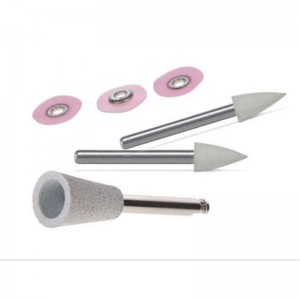
 Abrasive Wheels & Discs
 Buffs
Buffs
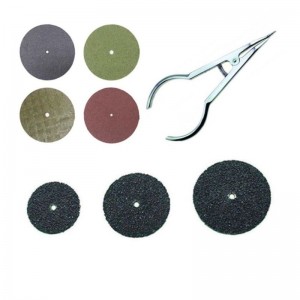 Composite Finishing & Polishing
 Finishing and Separating Discs
 Finishing and Polishing Kits
 Finishing Strips
 Flexible Polishers
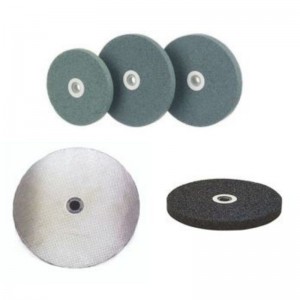 Heat Free Grinding Wheels
-300x300.jpg "Lathe Wheels") Lathe Wheels
Lathe Wheels
-300x300.jpg "Mandrels") Mandrels
Mandrels
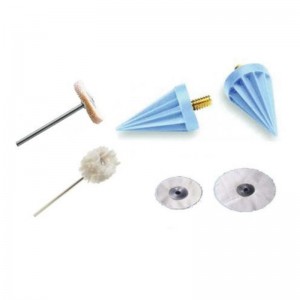 Mounted Polishers, Brushes, Buffs
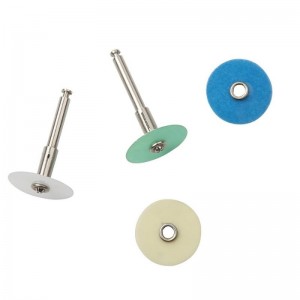 Polishing Discs
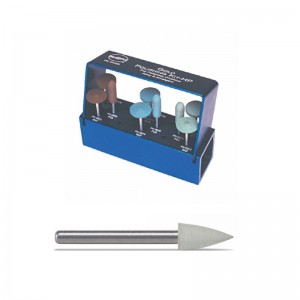 Polishing Kits
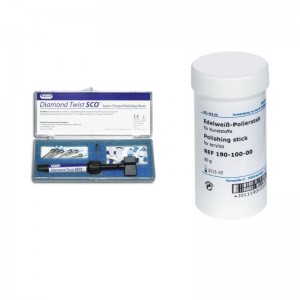 Polishing Paste
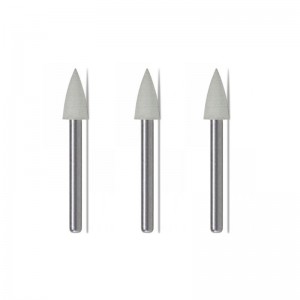 Polishing Points
 Reciprocating Systems
 Rubberized/Silicone