

Matrix Materials
Dental Matrix Materials and Matrix Bands for Quality Contacts
In everyday restorative practice, properly selected dental matrix materials largely determine contact quality, anatomical form, and the cleanliness of restoration margins. With the help of dental matrix bands, clinicians rebuild lost tooth structure, control material extrusion, and create a predictable interproximal space. In the Orthazone catalog, you will find classic metal systems such as metal matrix bands and Tofflemire matrix bands, modern sectional matrix system options, as well as transparent clear matrix strips and mylar matrix strips for esthetic composite restorations.
The role of dental matrix materials in restorative dentistry
A matrix system is a structural support for any restorative material, not just a band around the tooth. Well-chosen dental matrix materials help clinicians:
- rebuild the anatomical contour,
- create a tight contact point,
- control the marginal ridge and overall volume of the restoration,
- minimize overhangs and excess material.
When working with composite materials from Flowable Composites and Bulk Fill Composites, adhesives from Dental Bonding Agents and liners from Cements & Liners, the matrix becomes an integral part of a single clinical protocol. Without an appropriate dental matrix bands selection, even the best restorative material will not deliver stable, functional, and easy-to-clean contact areas.
Main types of matrix systems and bands
Metal matrix bands and classic Tofflemire matrix bands
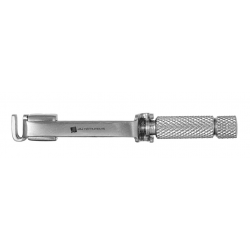
Traditional metal matrix bands remain a workhorse for many clinical situations. They provide rigidity, a stable geometry, and secure fixation, especially when restoring posterior teeth. The Tofflemire matrix bands system is familiar to most clinicians: a retainer and metal band allow you to quickly assemble a construct around the tooth, adjust tension, and fix the matrix reliably.
These solutions are particularly convenient in amalgam restorations and relatively straightforward Class II composite cases where highly anatomical contacts are not required, and simple, robust restorations are the priority.
Pre-contoured matrix bands and anatomical forms
Pre-contoured matrix bands are anatomically pre-shaped metal bands designed to reproduce natural proximal contours. Their task is to help the clinician achieve a proper contact point and physiological convexity of the wall with minimal chairside modification. This reduces the risk of overhangs and the need for aggressive finishing and trimming.
In cases with significant proximal loss of tooth structure, deep Class II cavities, or tight contact with adjacent teeth, pre-contoured matrix bands often provide a more predictable result than flat metal bands.
Sectional matrix system and sectional matrix bands
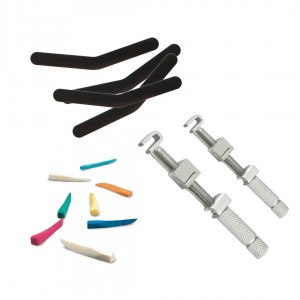
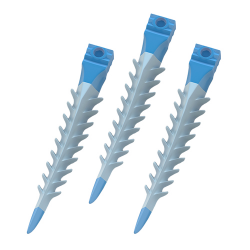
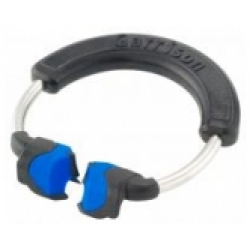
For composite Class II restorations, a modern standard of care is the sectional matrix system. Instead of a single continuous band, segmented sectional matrix bands are used together with rings and wedges. This design helps create a well-defined anatomic contact and proper proximal contour.
A sectional matrix system is especially advantageous when restoring multiple proximal surfaces and when the goal is a tight contact with a natural interproximal profile. In combination with flowable composites and bulk-fill materials, these systems reduce the amount of finishing required and deliver a stable result already at the modeling stage.
Anterior and posterior matrix systems
Posterior matrix system for molars and premolars
Posterior matrix system solutions are designed with molar and premolar anatomy in mind. For posterior teeth, matrix height, rigidity, and stability in a confined field often under a rubber dam are essential. Depending on the clinical case, the dentist may choose classic Tofflemire matrix bands, anatomical pre-contoured matrix bands, or a full sectional matrix system.
In deep cavities and when working with bulk-fill composites and liners from the Cements & Liners category, the matrix must allow precise control over the proximal contour and marginal ridge height while maintaining easy access for layering.
Anterior matrix system in the esthetic zone
In the anterior region, requirements for matrix design are different: esthetics, incisal edge morphology, contact point position, and translucency become critical. An anterior matrix system often includes specialized forms and bands that help reconstruct mesial and distal corners of incisors and canines.
The choice within an anterior matrix system depends on defect size, the type of restoration (Class III, IV, closing diastemas), and the materials used. Combined with bonding agents and etching products, a properly selected anterior matrix system allows you to reproduce natural tooth contours and light transmission.
Transparent matrices for composite restorations
Clear matrix strips and mylar matrix strips
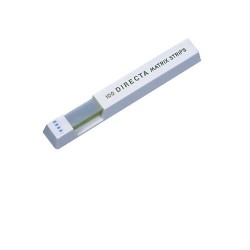
Clear matrix strips and mylar matrix strips are transparent polyester (Mylar) bands mainly used in anterior and cervical areas. Their key advantage is transparency: you can light-cure composite through the matrix and visually control both form and layer thickness.
These matrices are especially useful for closing diastemas, managing black triangles, and restoring Class III and IV cavities and incisal edges. Mylar matrix strips often leave a smooth, glossy surface immediately after removal, reducing the amount of finishing and polishing required.
Transparent matrices in esthetic work
For cosmetic restorations, transparent clear matrix strips help shape enamel shells, control enamel and dentin layer thickness, and build proper incisal edge form. This is particularly valuable in comprehensive esthetic protocols where matrices are used together with materials from cosmetic and veneer systems and bleaching regimens.
After removing mylar matrix strips, surfaces frequently require only minimal contouring and polishing, saving chair time and preserving the anatomy that was created against the matrix.
How to choose dental matrix materials for the clinical case
Choosing between a traditional band and a sectional matrix system
The choice between classic metal dental matrix bands and a modern sectional matrix system depends on the restorative material and the complexity of the defect. For amalgam restorations or simple Class II composites, traditional Tofflemire matrix bands often perform adequately.
When you primarily work with composite restorations, especially in complex proximal defects, sectional matrix bands usually provide better anatomy and tighter contact. Combined with flowable and bulk-fill composites, these systems offer finer control over volume and contour.
Anterior vs posterior teeth: anterior matrix system and posterior matrix system
When choosing between an anterior matrix system and a posterior matrix system, the primary factor is tooth position. For anterior teeth, transparency, thinness, and the ability to reproduce incisal edge and contact point shape are paramount. For molars and premolars, stability, height, and rigidity are more critical.
A well-matched system makes the procedure easier for both clinician and assistant: fewer improvisations, fewer adjustments during material placement and wedge placement, and more predictable outcomes.
Material, thickness, and handling
Metal dental matrix bands provide good stiffness and stability, which is important in posterior teeth and when working with amalgam. Transparent clear matrix strips and mylar matrix strips are more suitable in anterior areas and when using light-cured composites, where light transmission and esthetics are priorities.
Band thickness also matters: thinner bands make it easier to achieve tight contacts but may be less rigid; thicker bands are more stable but require more experience to form ideal contacts. In all cases, the matrix system must be compatible with the chosen restorative materials composites from Flowable Composites and Bulk Fill Composites and liners or bases from Cements & Liners.
Matrix materials at Orthazone
Assortment and filters
The Matrix Materials section at Orthazone offers various dental matrix materials for both anterior and posterior teeth. You can choose classic dental matrix bands, metal metal matrix bands and Tofflemire matrix bands, anatomical pre-contoured matrix bands, modern sectional matrix system and sectional matrix bands, as well as transparent clear matrix strips and mylar matrix strips for esthetic work. The catalog allows you to filter by indication (anterior/posterior), material, and system type.
Building a complete restorative setup
When planning your purchase, it is efficient to assemble a full kit for multiple restoration classes at once. Alongside matrix systems, you can order composite materials from Flowable Composites and Bulk Fill Composites, bonding agents from Dental Bonding Agents, etchants from Etching Gels and liners and bases from Cements & Liners. This approach helps standardize protocols within the clinic and simplifies training.
Online ordering and shipping across the USA
Orthazone is designed for dental practices and clinics throughout the United States. You can quickly select the appropriate dental matrix materials, compare different systems, and place orders online. Fast shipping across the USA and easy reordering of preferred items help maintain a stable stock of matrices and related consumables, even in high-volume and multi-location practices.
Practical use cases for matrix materials
Class II restorations with a sectional matrix system
For complex proximal defects in posterior teeth, a sectional matrix system with sectional matrix bands allows you to create a pronounced anatomic contact and physiological contour. Combined with a flowable composite as an adapting layer and bulk-fill materials as the main volume, you can reduce working time and achieve a tight contact with minimal finishing.
Conventional restorations with Tofflemire and metal matrix bands
In simpler Class II cases and in amalgam restorations, classic Tofflemire matrix bands and metal matrix bands remain a reliable choice. The clinician uses a familiar technique, quickly places the matrix and wedge, and controls band height and tension. This solution is convenient where extreme anatomical precision is not required, and robustness and simplicity are the main goals.
Esthetic anterior restorations with clear and mylar matrix strips
When closing diastemas, managing black triangles, or restoring Class III and IV lesions, transparent clear matrix strips and mylar matrix strips help form smooth contours, stable contact points, and glossy surfaces. The ability to light-cure composite through a transparent matrix simplifies layering and shape control. After matrix removal, surfaces often need only minor contouring and polishing, saving chair time and preserving the intended anatomy.
FAQ
What is the difference between metal matrix bands and a sectional matrix system in daily practice?
Metal matrix bands are classic, continuous metal strips that are well suited for simple cavities and amalgam restorations. A sectional matrix system uses segmented bands and rings, allowing better formation of anatomic contacts and contours in composite Class II restorations.
When should I use Tofflemire matrix bands and when sectional matrix bands?
Tofflemire matrix bands are appropriate for relatively simple defects and for amalgam or universal composites when highly anatomical contacts are not critical. Sectional matrix bands are preferable for complex proximal cavities and composite restorations where precise contact form, contour, and minimal finishing are important.
In which cases are clear matrix strips and mylar matrix strips indicated?
Clear matrix strips and mylar matrix strips are primarily used in the anterior and cervical regions where transparency and esthetics are key. They are indispensable in Class III and IV restorations, diastema closures, and management of black triangles, especially when working with light-cured composites that are polymerized through the matrix.
How do I choose between an anterior matrix system and a posterior matrix system?
For anterior teeth, an anterior matrix system with thin, often transparent forms is chosen to reproduce the incisal edge and contact points accurately. For molars and premolars, a more rigid and stable posterior matrix system is preferred, providing sufficient height and strength for larger posterior restorations under occlusal load.






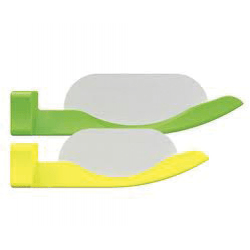
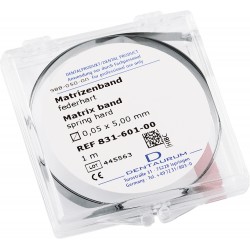
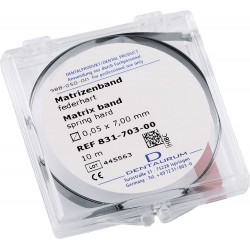
Supplier: Dentaurum Inc.
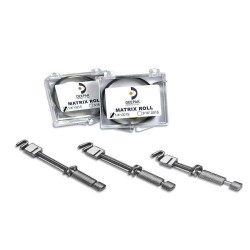

Supplier: DC Dental