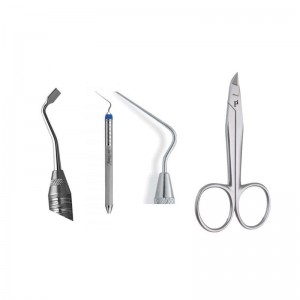

Crown And Bridge Instruments
Crown and Bridge Instruments for Prosthodontic Procedures
The Crown And Bridge Instruments category focuses on specialized tools used at every stage of working with crowns and bridges - from removing old restorations to final seating of new ones. Here you will find a range of dedicated crown and bridge instruments: removal systems, scissors for trimming, crimping and contouring pliers, and seating instruments. These dental crown and bridge instruments provide more precise, safer, and more predictable workflows than general-purpose instruments.
The role of crown and bridge instruments in prosthodontics
High-quality prosthodontic work requires not only good materials and cements, but also instruments that enable controlled removal, adaptation, and placement of restorations. Specialized crown and bridge instruments help clinicians:
- gently remove temporary and permanent crowns and bridges,
- adjust margins and contours before cementation,
- achieve accurate seating and patient comfort,
- reduce the risk of root fractures, chipping, and soft tissue trauma.
Using well-designed dental crown and bridge instruments makes working with materials from the Crown & Bridge & Denture category, cements from Cements & Liners, and finishing tools like Dental Burs more controlled and repeatable. Instead of “fighting” the restoration, the clinician follows a clear, stepwise clinical protocol.
Main types of crown and bridge instruments
Instruments for crown and bridge removal
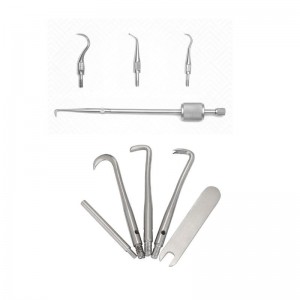
The group of crown and bridge removal instruments includes various mechanical systems, pliers, and spreaders designed to safely separate restorations from cement. Under the broad term crown and bridge remover you will find different solutions—from traditional impact devices to screw-type systems that apply a controlled force to the crown or bridge.
Crown remover pliers are designed to grasp and displace the crown and are effective when the restoration offers a reliable area for engagement. For multi-unit restorations, specialized bridge remover instruments help distribute force across several abutments and lower the risk of damage.
The crown spreader instrument plays a distinct role: it is used to gradually open the interface between the crown and the tooth or core, step by step weakening the cement layer without excessive stress on the root. Depending on the clinical situation, the dentist may choose crown and bridge forceps, screw-type, or impact-type crown and bridge removal instruments, selecting the option that provides maximum control with minimal risk.
Instruments for adaptation, contouring, and seating
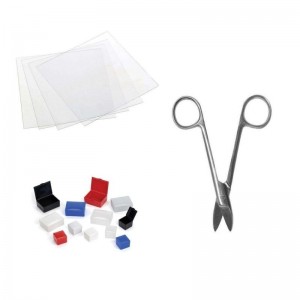
Beyond removal, precise adjustment and seating are critical. Crown and bridge scissors are used to trim the margins of metal and some plastic temporaries, adjust height, eliminate overhanging edges, and refine the cervical contour.
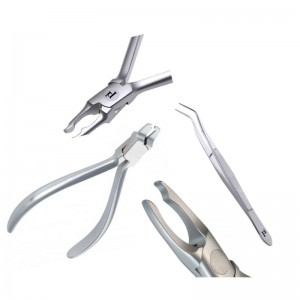
Crown and bridge crimping pliers are used to crimp the crown margin along the finish line, improving marginal fit and minimizing gaps. Crown and bridge contouring pliers help shape crown walls and margins to achieve the desired anatomic profile and a smooth transition to soft tissues.
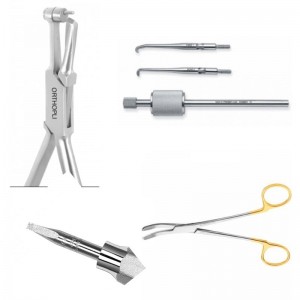
For the cementation phase, clinicians rely on crown and bridge seating instruments, which help apply even, controlled pressure when seating crowns and bridges. In combination with carefully selected cements from Cements & Liners and materials from the Crown & Bridge & Denture category, this toolkit supports tight, yet controlled seating of restorations.
How to choose Crown And Bridge Instruments for clinical needs
Restoration type and removal strategy
The choice among crown remover pliers, a crown spreader instrument, crown and bridge forceps, and other crown and bridge removal instruments depends directly on the restoration design. For single crowns on temporary cement, gentle force applied via pliers or spreaders is often sufficient. For firmly cemented permanent restorations with complex geometry, more powerful crown and bridge remover systems are indicated.
When a bridge must be removed, bridge remover instruments are preferred, as they allow you to distribute forces between abutments and respect the prosthesis design. Before selecting a removal technique, it is important to evaluate the cement layer, abutment condition, and fracture risk radiographically, and to consider whether temporary or permanent cements were used.
Adaptation and finishing of crowns and bridges
During try-in of temporaries and lab-made restorations, crown and bridge scissors allow quick and precise height adjustment, removal of overhanging margins, and shaping of the cervical line. Crown and bridge crimping pliers are used to crimp metal margins onto the finish line, which is especially relevant for metal and PFM crowns, temporary caps, and certain frameworks.
With crown and bridge contouring pliers, clinicians can fine-tune wall contour, create proper emergence profiles, and reduce irritation of soft tissues. After this stage, Dental Burs are often used to make final occlusal and contact adjustments after cementation, but the bulk of adaptation is accomplished with well-chosen crown and bridge instruments.
Ergonomics, sterilization, and building a chairside kit
When selecting crown and bridge instruments, it is important to evaluate both functionality and ergonomics: steel quality, handle design and surface, smoothness of joints, and the reliability of locking mechanisms in pliers and forceps. Instruments should feel stable in the hand and allow precise control of applied force.
For a general practice, a compact core kit of dental crown and bridge instruments usually includes a universal crown and bridge remover, one or two types of crown remover pliers or crown and bridge forceps, crown and bridge scissors, and a pair of crown and bridge crimping pliers and crown and bridge contouring pliers. For a prosthodontics-focused office, it is reasonable to extend the kit with dedicated bridge remover instruments, several variants of crown spreader instrument, and additional crown and bridge seating instruments.
Proper sterilization and maintenance prolong instrument life. Cutting edges, working tips, and joints should not be damaged or corroded during processing. Regular inspection and timely replacement of worn dental crown and bridge instruments support safety and precision in daily use.
Crown And Bridge Instruments at Orthazone
Assortment and catalog navigation
The Crown And Bridge Instruments section at Orthazone includes both basic and highly specialized tools. Here you can select:
- core crown and bridge instruments for removal, adaptation, and seating,
- various crown and bridge removal instruments and crown and bridge remover systems for different restoration types,
- crown remover pliers, crown and bridge forceps, dedicated bridge remover instruments, and crown spreader instrument options,
- adaptation tools such as crown and bridge scissors, crown and bridge crimping pliers, and crown and bridge contouring pliers,
- crown and bridge seating instruments to support controlled cementation.
Intuitive filters help you quickly narrow the selection by indication (removal, contouring, seating), restoration type, and instrument design.
Building a kit around your clinical protocols
The Crown And Bridge Instruments category is designed to complement prosthodontic materials from Crown & Bridge & Denture and cements from Cements & Liners. You can assemble a tailored kit that includes core crown and bridge removal instruments and crown remover pliers for safe debonding, plus crown and bridge scissors, crown and bridge crimping pliers, crown and bridge contouring pliers, and crown and bridge seating instruments for precise try-in and cementation.
In high-volume prosthodontic practices and group settings, it makes sense to standardize instrument sets: the same crown and bridge instruments at each operatory, unified protocols for handling temporary and definitive restorations, and a clear list of instruments for bridge removal and adjustment.
Online ordering and shipping across the USA
Orthazone offers an easy-to-use online catalog with photos, descriptions, and specifications for each instrument. Clinicians and purchasing managers can quickly compare different dental crown and bridge instruments, select the appropriate kit, and place orders online. Fast shipping throughout the USA and convenient reordering of proven items help unify instrumentation across a single office or a multi-location group.
Practical use cases for Crown And Bridge Instruments
Removing temporary and permanent crowns
One of the most common scenarios is removing a temporary crown before seating the definitive restoration. Gentle crown and bridge removal instruments or crown remover pliers are used to detach the crown from temporary cement without damaging the abutment.
When removing old permanent crowns, the strategy depends on the cement and design. In some cases, a crown spreader instrument is sufficient to gradually release the crown along the cement line. In others, crown and bridge forceps or combined crown and bridge remover systems are preferred, especially when higher but controlled forces are needed.
Removing bridge restorations
Bridge removal requires an even more cautious approach, as forces act on multiple abutments. Specialized bridge remover instruments allow you to control both the direction and magnitude of applied force, reducing the risk of damage to abutment teeth.
In some cases, clinicians use a combination of crown and bridge remover systems with protective pads, intermediate adapters, and radiographic control to monitor separation of the cement layer and avoid overloading individual abutments.
Adapting, contouring, and seating crowns
Another common scenario is adjustment of temporary or lab-made crowns before cementation. With crown and bridge scissors, the clinician trims margins, eliminates overhangs, and refines the cervical line to match the gingival contour. Crown and bridge contouring pliers are then used to fine-tune external contours, while crown and bridge crimping pliers gently crimp metal margins along the finish line.
The final stage is seating the restoration with crown and bridge seating instruments, which help distribute pressure evenly and achieve a tight fit without excessive force. After cementation, occlusion can be refined with Dental Burs, but most of the adaptation is done with the proper selection of crown and bridge instruments.
FAQ
How do crown remover pliers differ from other crown and bridge removal instruments?
Crown remover pliers are designed to grasp and displace the crown and require adequate access and a reliable area for engagement. They work well for many temporary crowns and selected permanent restorations with accessible walls. Other crown and bridge removal instruments—such as screw-type, impact-type systems and spreaders—are used where access is limited, crown geometry is complex, or more finely controlled force is needed.
When is a crown spreader instrument preferable to pliers or forceps?
A crown spreader instrument is ideal when you need to gradually break the cement seal around the tooth, increasing the gap step by step along the margin. This is especially useful for single crowns where minimal stress on the root and supporting tissues is critical. Pliers and crown and bridge forceps are more often chosen when it is safe to apply higher traction forces through direct crown engagement.
Which crown and bridge instruments are essential in a basic general practice kit?
A core kit typically includes a universal crown and bridge remover, one or two models of crown remover pliers or crown and bridge forceps, crown and bridge scissors for margin trimming, and basic crown and bridge crimping pliers and crown and bridge contouring pliers for crown adaptation. This combination covers most everyday tasks for temporary and definitive restorations in a general practice setting.
How should I care for dental crown and bridge instruments to extend their service life?
Follow the manufacturer’s recommendations for cleaning and sterilization, avoid aggressive agents that can damage metal and joints, and protect working tips from mechanical impact. Regular inspection and timely replacement of worn dental crown and bridge instruments help preserve grip accuracy, cutting edges, and locking mechanisms, which directly affects safety and clinical quality.